Social Studies: World History
Science: Life Science
- Grade: 4
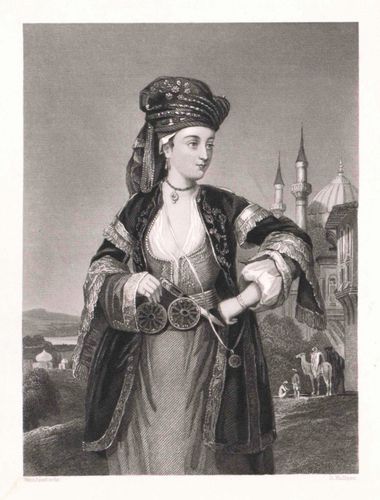
Mary Wortley Montagu
Lady Mary Wortley Montagu (1689–1762) did not go to medical school. Yet Montagu has gone down in history as a healer. She helped slay the "speckled monster."
Investigation
Montagu was a British noble. At age 26, she caught smallpox, a disease known as the speckled monster. Smallpox started with a high fever, chills, pain, nausea, and vomiting. After a few days, the fever went away. A rash appeared on the face and inside the eyelids.
Three in 10 smallpox sufferers died. Montagu’s brother was among them. Those who survived carried reminders of the disease. Some lost their eyesight. Montagu was among those scarred with pockmarks.
In 1717, Montagu traveled to Constantinople (now called Istanbul). That was the capital of the Ottoman (Turkish) Empire, to which her husband was an ambassador. There, she studied local culture. She witnessed healers battle smallpox with a method known as variolation.
The healers rubbed smallpox scabs onto scratches on the skin of healthy persons. Sometimes they blew dried smallpox scabs up a person’s nose.
Variolation had been performed for centuries. It was believed to have come from India and China. Montagu wondered: How did these practices work?
Solution
Montagu believed in the treatment enough to allow her son to be variolated. When she returned to England, Montagu publicized the method. During a smallpox outbreak in 1721, she had the treatment performed on her daughter in front of royal court doctors.
Royal family members were convinced that variolation worked. The method then became fashionable in Europe.
The practice was the basis for vaccinations. Dr. Edward Jenner performed the first vaccination in 1796. The injections, or shots, that patients get contain a mild form of the disease that the injections are meant to fight. In response, the body builds up a natural defense to the disease.
Conclusion
Montagu understood how dangerous smallpox could be. She trusted a new found treatment enough to allow her children to be treated. Her caring and experience helped save many lives in England during her lifetime.
Once a universal killer, the last natural case of smallpox occurred in 1977 in Somalia, Africa. There is no more speckled monster.
disease
- sickness
- illness
- plague
outbreak
- epidemic
- rise
- bout
patient
- victim
- case
- outpatient
Comprehension Questions
- Lady Montagu allowed her son to be treated by healers.
- Lady Montagu had her daughter treated in front of royal court doctors.
- Lady Montagu brought a healer from Constantinople to demonstrate.
- Lady Montagu showed them pictures of this treatment.
- Lady Montagu’s experiences in Constantinople
- the occurrence of the last natural case of smallpox
- Lady Montagu’s decision to have her daughter treated to prevent smallpox
- the first vaccination performed against smallpox
The practice was the basis for vaccinations. Dr. Edward Jenner performed the first vaccination in 1796. The injections, or shots, that patients get contain a mild form of the disease that the injections are meant to fight. In response, the body builds up a natural defense to the disease.
What can you conclude about vaccinations based on this information?
- Vaccinations are used to make people sick on purpose so that they don’t get sick again.
- Vaccinations are used to protect people from all diseases.
- Vaccinations are the only way to prevent people from getting sick.
- Vaccinations are used to prevent people from getting seriously ill.
- It was very unusual for a brother and sister to both get smallpox.
- All survivors of smallpox lost their sight.
- Many survivors of smallpox were scarred for life.
- Ninety percent of people survived having the disease of smallpox.
- Lady Mary Wortley Montagu helped bring the practice of variolation to Europe as a treatment for smallpox, saving many lives.
- Smallpox was a deadly disease that was eradicated through the use of variolation by Lady Mary Wortley Montagu.
- Dr. Edward Jenner was inspired by the practice of variolation to create the first vaccines to prevent disease.
- Smallpox gained the nickname the speckled monster because it is believed to originate from a spotted cat.
Once a universal killer, the last natural case of smallpox occurred in 1977 in Somalia, Africa.
As used in this sentence, what does the word "universal" most likely mean?
- deadly
- being in outer space
- existing everywhere
- learning new skills
_________ she helped to make popular a new treatment for smallpox that saved many lives, Lady Montagu is considered a healer.
- Before
- But
- Because
- Although
8.According to the text, what method of preventing smallpox did Montagu learn about in Constantinople?
(written answer)
9.Read these sentences from the text.. . . Montagu has gone down in history as a healer. She helped slay the “speckled monster.”
Why might the author call smallpox the “speckled monster”? Use evidence from the text to support your answer.
. . . Montagu has gone down in history as a healer. She helped slay the “speckled monster.”
Why might the author call smallpox the “speckled monster”? Use evidence from the text to support your answer.
(written answer)


Không có nhận xét nào:
Đăng nhận xét