Blog này thảo luận và chia sẻ những tri thức về khoa học khí quyển và các khoa học khác.
"Mọi thứ chúng ta làm đều phải dựa vào nghiên cứu KHOA HỌC chất lượng cao nhất". Thien V. Le
vô sinh cũng đang gia tăng - một thực tế là, như một nghiên cứu gần đây đã chứng minh, có thể liên quan đến sự phổ biến ngày càng tăng của một loại hóa chất rất phổ biến, chúng chắc chắn đang ở trong cơ thể bạn ngay bây giờ.
Một nghiên cứu mới phát hiện ra rằng PFAScó thể khiến việc mang thai trở nên khó khăn hơn
PFAS là các hóa chất kháng nước và dầu mỡ có trong nước uống cũng như trong nhiều loại sản phẩm tiêu dùng như dụng cụ nấu ăn chống dính, quần áo không thấm nước, bao bì thực phẩm, lớp phủ chống vết bẩn trên thảm và vải bọc, sơn và các sản phẩm chăm sóc cá nhân.
Vậy làm thế nào cho dễ mang thai và mang thai đúng khoa học? Stay tuned next
https://pubmed.ncbi.nlm.nih.gov/36801327/
Abstract
Objectives: Experimental models have demonstrated a link between exposure to perfluoroalkyl substances (PFAS) and decreased fertility and fecundability; however, human studies are scarce. We assessed the associations between preconception plasma PFAS concentrations and fertility outcomes in women.
Methods: In a case-control study nested within the population-based Singapore Preconception Study of Long-Term Maternal and Child Outcomes (S-PRESTO), we measured PFAS in plasma collected in 2015-2017 from 382 women of reproductive age trying to conceive. Using Cox proportional hazards regression (fecundability ratios [FRs]) and logistic regression (odds ratios [ORs]) models, we assessed the associations of individual PFAS with time-to-pregnancy (TTP), and the likelihoods of clinical pregnancy and live birth, respectively, over one year of follow-up, adjusting for analytical batch, age, education, ethnicity, and parity. We used Bayesian weighted quantile sum (BWQS) regression to assess the associations of the PFAS mixture with fertility outcomes.
Results: We found a 5-10 % reduction in fecundability per quartile increase of exposure to individual PFAS (FRs [95 % CIs] for clinical pregnancy = 0.90 [0.82, 0.98] for PFDA; 0.88 [0.79, 0.99] for PFOS; 0.95 [0.86, 1.06] for PFOA; 0.92 [0.84, 1.00] for PFHpA). We observed similar decreased odds of clinical pregnancy (ORs [95 % CIs] = 0.74 [0.56, 0.98] for PFDA; 0.76 [0.53, 1.09] for PFOS; 0.83 [0.59, 1.17] for PFOA; 0.92 [0.70, 1.22] for PFHpA) and live birth per quartile increases of individual PFAS and the PFAS mixture (ORs [95 % CIs] = 0.61 [0.37, 1.02] for clinical pregnancy, and 0.66 [0.40, 1.07] for live birth). Within the PFAS mixture, PFDA followed by PFOS, PFOA, and PFHpA were the biggest contributors to these associations. We found no evidence of association for PFHxS, PFNA, and PFHpS and the fertility outcomes examined.
Conclusions: Higher PFAS exposures may be associated with decreased fertility in women. The potential impact of ubiquitous PFAS exposures on infertility mechanisms requires further investigation.
Người ta tin rằng số người trên toàn thế giới được chẩn đoán mắc chứng mất trí nhớ dự kiến sẽ tăng hơn gấp đôi từ 57,4 triệu vào năm 2019 lên 152,8 triệu vào năm 2050, gây thêm căng thẳng cho các dịch vụ y tế và xã hội cũng như nền kinh tế toàn cầu.
The study of more than 6,000 cognitively healthy participants in the United Kingdom aged 40 to 73 found people who consume more than 550 milligrams of magnesium each day have a brain age that is approximately one year younger by the time they reach 55 compared with someone with a normal magnesium intake of about 350 milligrams a day.
Căng thẳng có thể ảnh hưởng xấu đến sức khỏe và hạnh phúc của con người, bao gồm gây ra huyết áp cao và tăng nguy cơ mắc các bệnh tim mạch như bệnh tim mạch vành, điều cần thiết là phải hiểu phản ứng của cá nhân chúng ta đối với căng thẳng và xác định các yếu tố tiềm năng có thể tác động hiệu quả. bộ đệm căng thẳng.
Theo các nhà nghiên cứu, trạng thái biết ơn có thể cung cấp một lớp đệm bảo vệ độc đáo chống lại căng thẳng tâm lý cấp tính.
The results showed that state gratitude predicted lower systolic blood pressure responses throughout the stress-testing period, which means that the state of gratitude has a unique stress-buffering effect on both reactions to and recovery from acute psychological stress. It was also found that affect balance amplifies the effects of state gratitude.
Throughout history, women have felt the pressure to conform to their society’s definition of beauty. Standards of beauty often reflect cultural values and beliefs, and women have gone to great lengths to meet these ideals. At times, women have had to take extreme measures to live up to these standards at the cost of their own well-being.
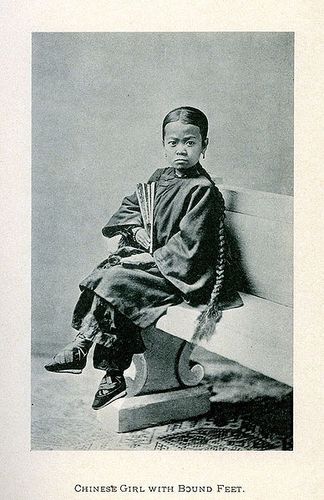
One of the most striking examples is the Chinese practice of foot binding. For centuries, small feet were considered very attractive and ladylike, and the Chinese believed they made a woman’s movements more feminine and dainty. In order to attain such a coveted feature, it was common practice for young girls to break and bind their toes with the intention of shrinking their feet—a process that kept them in excruciating pain for months. Foot binding was practiced for over a millennium, until the Chinese government officially outlawed the practice in 1911.
According to the legend, foot binding began when an ancient Chinese emperor’s dancer bound her feet to suggest the shape of a new moon or a flower. The emperor was impressed with her "lotus dance," and other women emulated the practice until it spread across the country. (Bound feet were also known as lotus flowers. )
Yet the Chinese foot binding tradition officially dates back to the Tang Dynasty. It gained popularity with the rise of neo-Confucianism and a hierarchical system of subservience. Scholars who reinterpreted ancient Confucian thought believed they discovered a "lost" philosophy focusing on nature, training the mind, and cultivating discipline. In neo-Confucianism, the subjects of a kingdom were expected to serve their rulers (who were considered mothers and fathers of the country) and in turn, wives were expected to defer to their husbands, sons to fathers, and the weak to the powerful.
Zhu-Xi, an influential scholar of neo-Confucianism, contributed to the acceptance of foot binding in China. According to Zhu-Xi, the practice reflected purity and discipline. He introduced it in Fujian as a way of spreading Chinese culture and teaching about the proper way for men and women to interact.
Another factor that led to the popularity of foot binding was women’s decreased involvement in civic life during the Song dynasty between 960-1279. During this period, a woman’s most important task was considered giving birth to sons. Women didn’t participate in politics and were infrequently seen on the streets, in comparison with the previous Tang dynasty. Some historians suggest that the diminished status of women during the Song Dynasty made foot binding more socially acceptable.
Binding usually began when a girl was between the ages of four and seven. First the foot was soaked in hot water and the toenails clipped. Then came the painful part: the four small toes were broken, and the foot was bandaged tightly with the toes turned under toward the bottom of the foot. (It was believed that young bones were soft, which is why binding started early.) In order for the girl to maintain her balance, the big toe was left unturned. Every few days, the foot was unwrapped and then wrapped again even tighter, until the foot shrunk to about four inches long. The arches were also broken, which caused the foot to contract even more. The entire process could take three years or longer, and it was so debilitating that young girls from wealthy families would often receive a servant to care for her personal needs, carry her when her feet hurt, and look after her on sleepless nights when the pain was unbearable.
Foot binding wasn’t just painful. It could also be dangerous. Complications included ulcerations and gangrene, and infections caused by ingrown toenails or lack of circulation from tight bindings. Sometimes toes even fell off—though this was considered a good thing because it meant the feet could be wrapped even tighter. Bound feet also had a foul odor and left many young women hardly able to walk. Sadly, it’s estimated that up to 10 percent of girls died in the process of foot binding.
Even if mothers could have objected to putting their daughters through such a tremendously painful process, social pressure likely made them willing practitioners of foot binding. Virtuous women were prized according to the tenets of Neo-Confucianism, and foot binding was the ultimate symbol of a woman’s purity and discipline. The ability to withstand foot binding reflected a woman’s character, and her attractiveness was revealed not in her face or body, but in her feet. A girl learned that her family’s reputation was linked to the binding of her feet early in life. In fact, the process was so crucial to a woman’s status in China that a girl with natural, unbound feet had limited marriage prospects, while girls with tiny, well-bound feet increased their chances of marrying into a good family and moving up in society.
Although the practice was promoted as a way to increase health and fertility, foot binding was clearly detrimental to a woman’s well-being. It greatly limited a woman’s ability to walk, and some women became practically crippled. Bound feet forced women to hobble around and take extremely small steps. Many men found this shuffling sort of walk very attractive. Yet as a result of their compromised feet, women rarely participated in social or political life, often becoming very dependent on their husbands and families. Even this was seen as a virtue, for a woman who stayed at home was considered chaste and faithful to her husband.
At first glance, foot binding might seem to contradict Confucian thought, which forbids body mutilation. However, since the feet were considered a sort of accessory, foot binding fell into a different category altogether. Ironically, a practice promoted to achieve the ultimate symbol of beauty grossly disfigured women’s feet. The toes often became gnarled or fused together. Many men were unaware of the disfigurement caused by foot binding because women’s feet were always carefully concealed. During the day, feet were covered in a binder, socks and shoes, sprayed with perfume and scented powder, and then hidden beneath leggings and skirts. At night women wore special slippers, even while sleeping. Women were expected to wash their feet in private and separately from the rest of their bodies.
Not all Chinese practiced foot binding. It was less common among peasants and in poor communities because women were needed to work in the fields. Mongols, Hakka and Tibetans living in Chinese territory didn’t bind their feet at all. In Manchu province, foot binding was outlawed. Yet because the “hobble” associated with bound feet was considered attractive, a special type of "flower bowl" shoe was invented in Manchu to give women the same swaying small steps. The shoe sat on a high platform made of wood or had a small central pedestal.
By the 20th century, both native Chinese and Christian missionaries were calling the practice of foot binding into question. Anti-foot binding reformers created natural-foot societies for members who promised not to bind their daughter’s feet, or not let their sons marry women with bound feet. Many women’s rights groups attacked the practice because of the suffering it caused women. Educated Chinese felt that the practice made them seem uncivilized to the rest of the world. Yet even after the government banned the practice in the early 20th century, some girls continued to bind their feet because it was such a long-held status symbol and a way for a woman to marry into money.
Today, few women with bound feet are still alive. The tiny, intricately decorated special shoes made for bound feet will be all that remains of the painful practice.
Comprehension Questions
1.
How did women in China bind their feet?
They broke their toes and wrapped the feet tightly.
They wrapped their toes together with bandages.
They broke their big toe and wrapped it under the foot.
They broke their toes and arches but did not wrap them.
2.
What does the author mostly describe in the passage?
the rising popularity of neo-Confucianism
the practice of foot binding and its effects
how the bones in feet naturally grow
why women accept painful beauty procedures
3.
In China, having bound feet was a marker of wealth and status. What evidence from the passage supports this conclusion?
“Although the practice was promoted as a way to increase health and fertility, foot binding was clearly detrimental to a woman’s well-being.”
“Virtuous women were prized according to the tenets of Neo-Confucianism, and foot binding was the ultimate symbol of a woman’s purity and discipline.”
“According to the legend, foot binding began when an ancient Chinese emperor’s dancer bound her feet to suggest the shape of a new moon or a flower.”
“Girls with tiny, well-bound feet increased their chances of marrying into a good family and moving up in society.”
4.
“During the day, feet were covered in a binder, socks and shoes, sprayed with perfume and scented powder, and then hidden beneath leggings and skirts. At night women wore special slippers, even while sleeping. Women were expected to wash their feet in private and separately from the rest of their bodies.”
What is a probable reason for why women’s feet always concealed?
because women’s feet were considered dirty
because only a woman’s husband could see her feet
to preserve the illusion of ideal beauty
because men did not like to look at feet
5.
What is this passage mostly about?
foot binding in China
neo-Confucianism
standards of beauty
women in ancient China
6.
Read the following sentences: “[Foot binding] greatly limited a woman’s ability to walk, and some women became practically crippled. Bound feet forced women to hobble around and take extremely small steps. Many men found this shuffling sort of walk very attractive.”
What does “hobble” mean as used in this sentence?
to walk quickly and purposefully
to walk unsteadily or with difficulty
to glide forward smoothly
to move in a quick, jumping motion
7.
Choose the answer that best completes the sentence below.
________ foot binding was promoted as a way to achieve ideal beauty, in reality it horribly disfigured women’s feet.
In conclusion
Initially
For instance
While
8.
Describe the dangers to a woman’s health that were associated with foot binding.
(written answer)
9.
Explain how having tiny, bound feet affected a woman’s reputation and social standing during the height of foot binding in China.
(written answer)
10.
Explain why Chinese mothers allowed their daughters’ feet to be bound despite the pain and the dangers to their daughters’ health.
Born in Litchfield, Connecticut, Harriet Beecher was the seventh child of the Reverend Lyman Beecher, a Congregational minister and moral reformer, and Roxanna Foote Beecher. She was schooled at the Pierce Academy and at her sister Catharine Beecher’s Hartford Female Seminary, where she also taught. She moved with the family to Cincinnati in 1832, when her father was appointed president of Lane Theological Seminary. The spectacle of chattel slavery across the Ohio River in Kentucky and its effects on the acquiescent commercial interests of white Cincinnati moved her deeply.
In 1836, she married Calvin Ellis Stowe, professor of biblical literature at Lane. The death of a son in 1849 led her away from her father’s Calvinism and gave supremacy in her views to the redemptive spirit of Christian love. By 1850, the family had moved to Maine, where, in response to the Fugitive Slave Act of that year, Stowe wrote Uncle Tom’s Cabin (1852), her most celebrated work. Sentimental and realistic by turns, the novel explored the cruelties of chattel slavery in the Upper and Lower South and exposed the moral ironies in the legal, religious, and social arguments of white apologists.
The immense impact of the novel (it sold 300,000 copies in its first year) was unexpected. Antislavery fiction had never sold well; Stowe was not an established writer, and few would have expected a woman to gain a popular hearing on the great political question of the day. Some female abolitionists had shocked decorum in the 1840s by speaking at public gatherings, but they were widely resented. The success of Uncle Tom’s Cabin went far toward legitimizing, if not indeed creating, a role for women in public affairs.
To the dismay of many northern radicals, Uncle Tom’s Cabin casually endorsed colonization rather than abolition. In fact, Stowe was unconcerned about the tactics that made slavery a political issue: for her, the problem was religious and emotional, and one that women were best equipped to confront. Her stated purpose, “to awaken sympathy and feeling for the African race” and to urge that readers “feel right” about the issue, belongs to a feminist and utopian agenda that contemporary readers were slow to recognize. In the South, the book was read as sectional propaganda; in the North, it was read as a compellingmoral romance. Although Stowe blamed the slave system itself as “the essence of all abuse” rather than the slaveholders and deliberately made its chief villain, Simon Legree, a displaced New Englander, the novel’s effect was to exacerbate regional antagonisms. Indeed, Uncle Tom’s Cabin, which called forth anti-Tom novels from southern writers, so raised the temperature of the dialogue that Lincoln would later, half-seriously, apportion to Stowe some responsibility for starting the Civil War.
Notable among Stowe’s subsequent works are A Key to Uncle Tom’s Cabin (1853), documenting her case against slavery; Dred: A Tale of the Great Dismal Swamp(1856), also on slavery; and The Minister’s Wooing (1859), a historical novel that attacks Calvinism. Stowe also wrote realistic regional fiction, including The Pearl of Orr’s Island (1861), which influenced Sarah Orne Jewett and Mary E. Wilkins Freeman. Her miscellaneous writings include Lady Byron Vindicated (1870), which created an international sensation by charging Lord Byron with incest, and Palmetto Leaves (1873), written at her winter home in Florida, which encouraged a Florida land boom.
Thomas F. Gossett, Uncle Tom’s Cabin and American Culture (1985); Eric J. Sundquist, ed., New Essays on Uncle Tom’s Cabin (1986); Forrest Wilson, Crusader in Crinoline: The Life of Harriet Beecher Stowe (1941).
Social Studies: Civics & Government, World History
Skills & Strategies: Main Idea
Social & Emotional Learning: Perseverance, Goal Setting
Grade: 8
USAID Pakistan
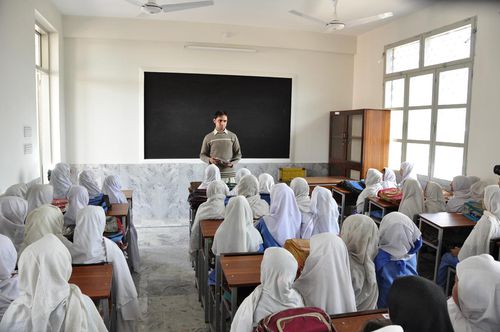
an all-girl class in a school in Pakistan
Extremists couldn’t stop Malala from inspiring girls around the world.
When 15-year-old Malala Yousafzai stepped onto her school bus on October 9, 2012, she had no idea that her life would change forever. As the bus rolled through her hometown of Swat Valley, Pakistan, she sang songs with her friends.
Then, two men approached the bus. They were members of the Taliban—an extremist group that began taking over the valley in 2008. The men boarded the bus, asked who Malala was, and then shot her in the face.
From a very young age, Malala had been well known in the region as a fighter for girls’ education. She had the support of her father Ziauddin, who rebelled against the Taliban’s belief that girls should be kept out of school, and had opened a girls’ school in the valley. By age 11, Malala began writing—anonymously—a blog that told the truth about life under Taliban oppression. She wrote fiercely about how the militant group was forcing girls out of school. When Malala was revealed as the author of the blog, the Taliban targeted her.
Moving to a New Country
After Malala was shot and critically wounded, her family moved to Birmingham, England, so she could recover in safety. By March 2013, she was well enough to start attending school in England. The attack had only made Malala’s conviction fiercer. She began to speak publicly about what had happened to her.
On her sixteenth birthday in 2013, Malala gave a speech at the United Nations focusing on education and women’s rights. Calling on world leaders to act, she reminded people that if half the world is uneducated, everyone loses. “The extremists were, and they are, afraid of books and pens. The power of education frightens them… The power of the voice of women frightens them… Let us pick up our books and pens. They are our most powerful weapons. One child, one teacher, one pen and one book can change the world.”
Malala has tirelessly continued her work ever since. In 2013, she and her father created the Malala Fund, which works to ensure that girls everywhere have access to free, quality education. In 2014, at just 17 years old, Malala became the youngest person to receive the Nobel Peace Prize. In 2015, she opened a school for Syrian refugee girls in Lebanon. Two years later, she began studying philosophy, politics, and economics at Oxford University.
Graduating During a Pandemic
In June of 2020, Malala graduated from Oxford, and gave a touching virtual commencement address to her fellow graduates. She commiserated about graduating during the COVID-19 pandemic, and reminded her classmates to fight for girls in developing countries who won’t have the privilege of returning to school.
Malala consistently reminds us that, as she said in her speech to the U.N., “We cannot succeed when half of us are held back.” In 2020, the Malala Fund released a strategic five-year-plan to get even more girls into school.
Now, even though she is still a young woman, Malala’s life has already revealed two very different stories: the horror of what can happen when militant groups of men are scared of the idea of educated women—and the brilliance that educated women bring to the world.
Vocabulary Activity
conviction
synonyms:
position
opinion
belief
oppression
synonyms:
tyranny
domination
Comprehension Questions
1.
What has Malala Yousafzai fought for from a young age?
clean water for everyone
an end to world hunger
religious tolerance
girls’ education
2.
Malala was targeted by the Taliban because she was fighting for girls’ education. What effect did the Taliban attack have on Malala’s dedication to education issues?
The attack scared her so badly that for many years she did not publicly admit what had happened to her.
The attack made her switch her focus from education for women to gun safety laws around the world.
The attack made her more fiercely committed to speaking out about education for women.
The attack made her reconsider her focus on education, but ultimately, after many years, she returned to the issue.
3.
Read these sentences from the text.
“On her sixteenth birthday in 2013, Malala gave a speech at the United Nations focusing on education and women’s rights. Calling on world leaders to act, she reminded people that if half the world is uneducated, everyone loses.”
What conclusion can you draw about what Malala probably believes in based on this information?
She probably believes that the most important issue throughout the world right now is pollution and air quality.
She probably believes that educating girls and women and making sure they have equal rights is a good thing for everyone.
She probably believes that world leaders are too stubborn to listen to what anyone else says about important issues.
She probably believes that woman’s rights are not very important but should still be talked about.
4.
What is one thing that Malala has done to work towards her goal of ensuring that girls get educated around the world?
She moved back to Pakistan and became a teacher.
She convinced England to change its entire school system.
She opened a school for Syrian refugee girls in Lebanon.
She created a scholarship at Oxford for girls to attend.
5.
What is the main idea of this text?
Malala Yousafzai moved to Birmingham, England and started attending school in England in 2013, and she later went to college there as well.
Malala Yousafzai is a passionate and dedicated advocate for girls’ education whose personal experience inspired her to work for change in the world.
On her sixteenth birthday, Malala Yousafzai gave a passionate speech to the whole United Nations about education and womens’ rights.
The Malala Fund, started by Malala Yousafzai and her father, raises money to ensure quality, free education for girls all around the world.