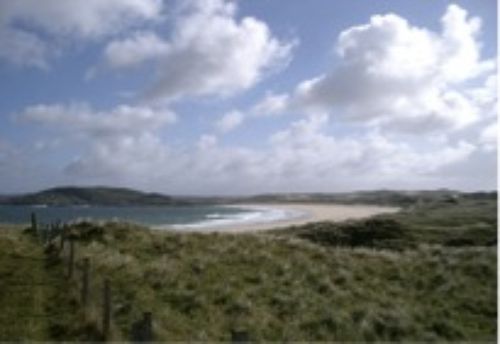
Have you ever looked up at clouds and wondered where they come from or what they are made of? Clouds can be different shapes, but they are all mostly made of water.
There are always small particles of water in the air that people can’t see. A lot of these tiny particles of water are in the form of a gas called water vapor. Most of the water vapor in the air comes from the oceans. This happens when liquid water toward the surface of the oceans is warmed, usually by the sun. Eventually, the warmed water becomes water vapor, rising into the air.
To make clouds, the water particles in the air have to come together, but they can’t come together as water vapor. They need to be liquid water or ice crystals. Water vapor can turn into liquid water through a process called condensation.
In the air, liquid water can stick to specks of dust, water drops, or ice crystals. This forms cloud droplets. Lots of cloud droplets together form clouds.
Comprehension Questions
1. What are clouds mostly made of? 
- air
- water
- sunlight
- none of the above
- air
- water
- sunlight
- none of the above
2. The text describes the sequence of how clouds form. What happens before water vapor turns into liquid water through condensation? - Water vapor rises in the air.
- Liquid water sticks to specks of dust, water drops, or ice crystals.
- Cloud droplets form clouds.
- Rain falls from the clouds.
- Water vapor rises in the air.
- Liquid water sticks to specks of dust, water drops, or ice crystals.
- Cloud droplets form clouds.
- Rain falls from the clouds.
3. Clouds are not entirely made up of water droplets. What evidence from the text supports this statement? - “Most of the water vapor in the air comes from the oceans. This happens when liquid water toward the surface of the oceans is warmed, usually by the sun.”
- “There are always small particles of water in the air that people can’t see. A lot of these tiny particles of water are in the form of a gas called water vapor.”
- “In the air, liquid water can stick to specks of dust, water drops, or ice crystals. This forms cloud droplets. Lots of cloud droplets together form clouds.”
- “To make clouds, the water particles in the air have to come together, but they can’t come together as water vapor.”
- “Most of the water vapor in the air comes from the oceans. This happens when liquid water toward the surface of the oceans is warmed, usually by the sun.”
- “There are always small particles of water in the air that people can’t see. A lot of these tiny particles of water are in the form of a gas called water vapor.”
- “In the air, liquid water can stick to specks of dust, water drops, or ice crystals. This forms cloud droplets. Lots of cloud droplets together form clouds.”
- “To make clouds, the water particles in the air have to come together, but they can’t come together as water vapor.”
4. Read these sentences: “In the air, liquid water can stick to specks of dust, water drops, or ice crystals. This forms cloud droplets. Lots of cloud droplets together form clouds.”As used in these sentences, what does the word “form” most nearly mean?
- destroy or harm
- make or create
- show or display
- train or guide
As used in these sentences, what does the word “form” most nearly mean?
- destroy or harm
- make or create
- show or display
- train or guide
5. What is the main idea of this passage? - Clouds can be different shapes, but they are all mostly made of water.
- To make clouds, the water particles in the air have to come together.
- Most of the water vapor in the air comes from the oceans.
- Clouds are formed when water vapor in the air turns into liquid water that can stick to specks of dust, water drops, or ice crystals.
- Clouds can be different shapes, but they are all mostly made of water.
- To make clouds, the water particles in the air have to come together.
- Most of the water vapor in the air comes from the oceans.
- Clouds are formed when water vapor in the air turns into liquid water that can stick to specks of dust, water drops, or ice crystals.
6. What is condensation?
7. Why is condensation necessary for clouds to form? Use evidence in the text to support your answer.
8. Choose the answer that best completes the sentence.__________ there are always small particles of water in the air, people cannot see them!
- As a result
- However
- Even though
- Because
__________ there are always small particles of water in the air, people cannot see them!
- As a result
- However
- Even though
- Because


Không có nhận xét nào:
Đăng nhận xét