Trong 2 ngày cuối tuần này (29-30/5) thì thứ 7 (29/5) là ngày tốt hơn vì không mưa. Tuy nhiên sang chiều tối CN thì Hanoi có thể có mưa giông.
Thứ Sáu, 28 tháng 5, 2021


Thứ Ba, 25 tháng 5, 2021
Mây và nắng rồi thi thoảng có mưa rải rác trong tuần này, nhưng cuối tuần lại khác. Vì sao?
Hanoi và miền Bắc đang bước vào tuần có thời tiết khá lý tưởng, trời mát, mây và nắng đan xen nhưng đôi khi có mưa rào nhẹ rải rác.
Hãy xem bản đồ nhiệt độ và nhiệt độ điểm sương lúc 1pm chiều nay. Nhiệt độ chỉ khoảng 26-27C (hình dưới)

Và nhiệt độ điểm sương thấp chỉ 23-24C. Điều này làm cho con người cảm thấy dễ chịu hơn.

Tuy nhiên đôi khi trời có mưa rào nhẹ rải rác làm cho chúng ta đi đường đôi khi phải mặc áo mưa. Câu hỏi như thường lệ là vì sao?
Điều này liên quan sự biến đổi của nhiệt độ theo độ cao. Do ảnh vị trí sống áp cao nóng trên cao đã làm cho không khí lạnh ở dưới tràn xuống từ phía bắc Vietnam nhưng trên cao sự thay đổi nhiệt độ không nhanh làm cho không khí mỏng sát đất bão hoà nhanh và có những lúc gặp mưa rào nhẹ rải rác.
Hình thế này cũng đảm bảo cho Hanoi và miền Bắc KHÔNG thể có giông lốc và mưa lớn.
Mưa rào (showers) là muốn nói thời tiết sẽ thay đổi nhiều trong ngày với mưa rồi tạnh thay nhau. Mưa rào thường mưa từ những đám mây riêng lẻ mà bạn có thể nhìn thấy trên bầu trời bởi vậy mà lúc mưa lúc tạnh và có thời tiết quang khô tạnh đan xen giữa. Bạn có thể bị những cơn mưa rào bất chợt trong ngày, nhưng đến một nơi khác gần cạnh thì lại không mưa khô ráo.
Khi nào thì mây sẽ giảm và hết mưa rải rác? Từ ngày mai mây và mưa sẽ giảm hơn hôm nay, nhưng vẫn đừng quên mang theo áo mưa vì vẫn có khả năng mưa rải rác vài nơi đặc biệt làm khu vực phía Tây Hanoi.
Riêng 2 ngày cuối tuần này (29-30/5) trời sẽ quang mây và đầy NẮNG. Nhiệt độ tăng nhanh nhưng cũng không thể oi nóng như tuần trước.
Thứ Hai, 24 tháng 5, 2021
Miền Bắc hết nắng nóng nhưng miền Nam đối mặt với mưa dông liên tục . Vì sao?
Như vậy miền Bắc đã hết một tuần thời tiết nguy hiểm (nắng và oi nóng). Trong đêm qua và sáng nay nhiều nơi đã có mưa dông. Hanoi mưa không nhiều nhưng cũng đủ làm cho cây cối xanh tươi sạch sẽ và mát trở lại. Trong tuần này thì cây ở nhà không cần phải được tưới nước nữa.

Miền Bắc tiếp tục duy trì trời MÁT và nhiều mây đôi khi có mưa trong tuần này như đã được phân tích cách đây 1 tuần ở đây: https://thienminhle.blogspot.com/2021/05/hanoi-chuan-bi-buoc-vao-ot-nang-va-oi.html.
Tuy nhiên trong tuần này thì thời tiết nguy hiểm nhất cần quan tâm là đối với khu vực Nam Bộ , Tây Nguyên và Nam Trung Bộ cả trên biển và trên đất liền. Hình trên là ảnh vệ tinh sáng nay màu đỏ là nơi có nguy cơ mưa to.
Mưa dông sẽ liên tục xảy ra ở đây và các khu vực đô thị như TP HCM có thể bị ngập lụt và cây đổ. Vậy vì sao? Phân bố trong khí quyển ở khu vực trên dự báo sẽ rất không ổn định khi mà sự giảm nhiệt độ trên cao dự báo sẽ giảm rất nhanh làm cho mưa dông mạnh xảy ra ở khu vực này.
Thứ Bảy, 22 tháng 5, 2021
Nghiên cứu mới: thịt đỏ, giáo dục và rượu bia liên quan đến ung thư đại tràng
Một nghiên cứu mới xuất bản (1) chỉ ra rằng ăn nhiều thịt đỏ hơn, học thức thấp hơn và sử dụng rượu bia nhiều hơn là liên quan đến ung thư đại tràng ở những người dưới tuổi 50. Một điều thú vị phát hiện là nhịn không uống rượu bia cũng liên quan.

Ở Mỹ tỷ lệ ung thư đại tràng xuất hiện sớm đã gần như tăng gấp đôi giữa năm 1992 và 2013. Xấp xỉ cứ 1 trong 10 người phát hiện ung thư đại tràng là ở tuổi dưới 50.
Các nhà nghiên cứu đã quan sát thấy sự tăng nhanh đặc biệt ở những người sinh từ những năm 1960s trong các nghiên cứu ở Mỹ, Canada, Úc và Nhật Bản. Trong suốt thời kỳ đó thì có những thay đổi lớn trong chế độ ăn của những thế hệ trẻ hơn ở các nước ĐANG phát triển. Những thay đổi như giảm ăn rau và hoa quả, nhưng tăng ăn đồ chế biến và đồ uống sẵn, béo, ít vận động.
Những nghiên cứu trước đây đã vạch ra những nhân tố nguy cơ tiềm tàng cho ung thư đại tràng xuất hiện sớm là bao gồm sử dụng thịt chế biến nhiều hơn, giảm ăn rau và hoa quả, chỉ số cân nặng cơ thể cao hơn, ít vận động, uống bia rượu nhiều hơn, hút thuốc, tiểu đường.
https://academic.oup.com/jncics/article/5/3/pkab029/6271523
Thứ Tư, 19 tháng 5, 2021
Hoa hậu Hoàn vũ Thế giới 2021: Một người không ăn thịt động vật và là một kỹ sư phần mềm
Hoa hậu người Mexico vừa mới trở thành Hoa hậu Hoàn vũ thế giới 2021 lần thứ 69. Cô 26 tuổi đã hoàn thành bằng kỹ sư phần mềm. Cô cũng là một người ăn chay trường và ủng hộ quyền phụ nữ. Cô thường xuyên chia sẻ các bữa ăn chay của cô với hơn 1.3 triệu người theo dõi cô.
Thứ Ba, 18 tháng 5, 2021
Origins of the Cold War and Soviet-American Confrontation: Readings 1 and 2
This text is provided courtesy of the Gilder Lehrman Institute of American History.
Reading 1
From Stettin in the Baltic to Trieste in the Adriatic an iron curtain has descended across the Continent. Behind that line lie all the capitals of the ancient states of Central and Eastern Europe. Warsaw, Berlin, Prague, Vienna, Budapest, Belgrade, Bucharest, and Sofia; all these famous cities and the populations around them lie in what I must call the Soviet sphere, and all are subject, in one form or another, not only to Soviet influence but to a very high and in some cases increasing measure of control from Moscow. The safety of the world, ladies and gentlemen, requires a unity in Europe, from which no nation should be permanently outcast… . Twice the United States has had to send several millions of its young men across the Atlantic to fight the wars. Surely we should work with conscious purpose … in a great number of countries, far from the Russian frontiers and throughout the world, Communist fifth columns are established and work in complete unity and absolute obedience to the directions they receive from the Communist center.
Winston S. Churchill: "Iron Curtain Speech", March 5, 1946
Reading 2
One cannot forget the following fact: the Germans carried out an invasion of the U.S.S.R. through Finland, Poland, Rumania, Bulgaria, and Hungary….One can ask, therefore, what can be surprising in the fact that the Soviet Union, in a desire to ensure its security for the future, tries to achieve that these countries should have governments whose relations to the Soviet Union are loyal?
"Stalin's Reply to Churchill," (interview with Pravda), New York Times, 14 March 1946
Comprehension Questions
1. According to Winston Churchill, what are Warsaw, Berlin, and other “famous cities” in Central and Eastern Europe subject to? 
(written answer)
2. What is the main idea of Reading 1?
(written answer)
3. Based on Reading 2, why might the Soviet Union want to make sure “Finland, Poland, Rumania, Bulgaria, and Hungary” are loyal to it?
(written answer)
4. What is the main idea of Reading 2?
(written answer)
5. Contrast the portrayal of the Soviet Union in Reading 1 with the portrayal of the Soviet Union in Reading 2. Use evidence from the text to support your answer.
(written answer)
The End of the Vietnam War: Conscience, Resistance, and Reconciliation, 1973
This text is provided courtesy of the Gilder Lehrman Institute of American History. This text includes a primary source by Edward M. Kennedy.

(Glider Lehrman Collection)
Edward Kennedy to Mr. Thursby, April 25, 1973
Vietnam was “America’s longest war.” While US operations tended to be very limited between 1945 and 1964, escalation in the early months of 1965 eventually led to the deployment of more than 2.5 million military personnel to South Vietnam through 1973.
While the literature on the Vietnam War is voluminous, the issue of draft resistance has either been overlooked or misunderstood by historians. Most people in fact do make a distinction between draft evasion and draft resistance. The virtual omission of draft resistance from the historical accounts of the Vietnam War is a manifestation of the period’s nagging effect on American culture and memory.
In January 1973, the Paris Peace Accords officially ended US involvement in the Vietnam War, although the majority of US troops would not leave until August of that year and the fighting between North and South Vietnam would continue until the fall of Saigon in 1975. Americans faced the daunting task of reuniting their own country torn apart by participation in a politically divisive and brutal conflict halfway around the world. The American public had become polarized in a way that it had not been since the Civil War.
This letter, written in April 1973 by Senator Edward Kennedy, discusses the need to care for those who served in Southeast Asia and to forgive those who “refused induction” for moral reasons so “that the nation can turn its attention to reconciliation and healing the wounds and bitterness created by this long and costly conflict.”
Although the question of amnesty occupies more than half of this letter, Kennedy made it clear that caring for America’s servicemen was his top priority:
But the first and immediate task is to care for the addict, the jobless and the wounded veterans home from Southeast Asia. It is our nation’s responsibility to help them right now. And only after we can insure that they are given every opportunity to rebuild their lives, can we then seek the answers to amnesty with the ultimate goal of restoring to our country the unity which this long and cruel conflict divided.
The issue of amnesty was tackled by Presidents Gerald R. Ford and Jimmy Carter. On September 16, 1974, President Ford issued a conditional amnesty proclamation for those who had evaded the draft, provided that they reaffirmed their allegiance to the United States and agreed to serve two years in a public service job. In 1977, just one day after his election, President Carter unconditionally pardoned anyone who had avoided the draft.
Unfortunately, Kennedy’s hopes for supporting servicemen returning from Southeast Asia were not realized. Many returned home to hostile receptions, limited mental health care, and a public that did not understand or want to understand the horrors servicemen had faced in combat.
FULL LETTER TRANSCRIPTION
EDWARD M. KENNEDY
MASSACHUSETTS
United States Senate
Washington, D.C. 20510
April 25, 1973
Mr. Thursby
Dear Mr. Thursby:
Thank you for taking the time to express your views on amnesty.
We all are relieved that the war is finally at an end and that the nation can turn its attention to reconciliation and healing the wounds and bitterness created by this long and costly conflict.
Our first task must be to provide security and comfort to the prisoners of war and to help restore them to American society. A like task lies ahead for the disabled veterans and those who became addicted to drugs while overseas. Some humanitarian relief also must be provided to the people of Southeast Asia in their struggle to rebuild a nation ravaged by war.
As part of this postwar adjustment, we must examine the question of how to treat those who refused induction by going underground or by leaving their country. During hearings held last year by the Senate Subcommittee on Administrative Practice and Procedure, the diversity of opinions was symbolized by the national commander of the American Legion in his statement against amnesty, and by the testimony of a young man who had completed a Federal prison sentence for refusing induction. This young man issued a strong plea for amnesty. There was a testimony by one father of a young soldier killed in Vietnam against amnesty. Yet another father of a soldier killed in Vietnam testified for unconditional amnesty. The same contradictory recommendations came in testimony from Vietnam veterans themselves.
In seeking to understand how best to proceed, I believe that our nation can look back at the [twenty-nine] instances of amnesty granted by Presidents in the past, including the unconditional amnesty after the Civil War. We often gain wisdom through learning what other men did at other times in our history. It seems that when the nation was most divided against itself, as it was after the Civil War, the end of hostilities was followed by the most sweeping amnesty in an effort to bind the wounds of war.
While the national interest requires reconciliation, there can be no amnesty for those who committed crimes and then deserted, nor for those whose motives had no relationship to the question of conscientious objection. For these, there only can be a return to face whatever judicial proceedings are demanded under the law.
For the others, these who out of deep belief, felt that they could not maim or kill another human being who was no threat to their lives or the security of their families, another judgment must be made. I believe that we may well examine the view of President Andrew Johnson when he granted at Christmas in 1868 a full pardon to all those who fought against the Union. He said that a “retaliatory or vindictive policy, attended by unnecessary disqualifications, pains, penalties” could only tend to hinder reconciliation among the people.
But the first and immediate task is to care for the addict, the jobless and the wounded veterans home from Southeast Asia. It is our nation’s responsibility to help them right now. And only after we can insure that they are given every opportunity to rebuild their lives, can we then seek the answers to amnesty with the ultimate goal of restoring to our country the unity which this long and cruel conflict divided.
Sincerely,
Edward M. Kennedy
Comprehension Questions
1. The text includes a letter by Senator Edward Kennedy in which he discusses the need to care for those who served in Southeast Asia. What else does it discuss the need to do?
(written answer)
2. Explain at least two problems the United States faced after the Vietnam War. Use evidence from the text, including Edward M. Kennedy's letter, to support your answer.Support your answer with evidence from the text.
(written answer)
3. What is the main idea of this text?
(written answer)
4. As used in Kennedy’s letter, what does the word “amnesty” mean?Support your answer with evidence from the text.
(written answer)
Thứ Hai, 17 tháng 5, 2021
Hanoi: Chuẩn bị bước vào đợt NẮNG và OI NÓNG đầu tiên và tiêu thụ điện sẽ tăng. Vì sao?
Trước khi phân tích một đợt nắng và oi NÓNG đầu tiên sẽ xảy ra cho Hanoi thì chúng ta hãy xem lại diễn biến thời tiết trong 1 tuần qua (từ 11 tháng năm đến hôm nay 17/5).
Hình dưới là biến đổi của nhiệt độ và nhiệt độ điểm sương. Trong tuần qua không khí Hanoi khá lý tưởng ngày nắng và chiều tối có mưa giông trời khá sạch sẽ và mát. Nhiệt độ thấp nhất 24C và cao nhất 36C. Nhiệt độ điểm sương thể hiện lượng hơi nước thực trong khí quyển trong tuần qua cũng hầu hết dưới 25C. Điều này làm cho con người không cảm thấy khó chịu bị oi nóng toát mồ hôi. Thậm chí nhiều buổi sáng trong tuần qua Hanoi còn hơi se lạnh


Vậy vì sao Hanoi có được không khí lý tưởng trong tuần qua? Điều này luôn luôn liên quan vị trí sống áp nóng và rãnh lạnh trên cao là cho gió đông phát triển mạnh. Hãy xem lại tốc độ gió và hướng gió (hình dưới) chúng ta thấy rõ gió đông thổi chủ yếu trong tuần qua.

Tuy nhiên trong tuần này lại khác:
Một đợt NẮNG (hầu như không có mây) và rất oi NÓNG đầu tiên sẽ xảy ra từ ngày kia thứ 4 (19/5) và kéo dài đến hết tuần (23/5). Nhiệt độ cao nhất trong các ngày từ thứ 5 đến CN là khoảng 37-38C, nóng nhất vào CN (23 tháng 5) lên đến 39-40C. Chú ý tiêu thụ điện và cháy nổ trong thời gian này.
Đợt nắng nóng này sẽ chấm dứt khi có một đợt mưa giông mạnh xảy ra vào chiều tối và đêm đêm CN tuần này. Trong tuần sau trời lại MÁT, nhiều mây và đôi khi có mưa.
Thứ Tư, 12 tháng 5, 2021
Hawaii's Traditional Hula Dance
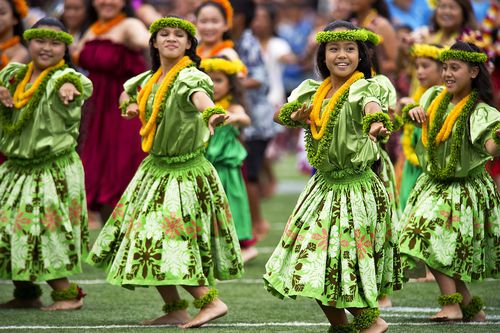
dancers performing hula dance
The Hula is a traditional Hawaiian dance. It is known partly for its smooth and graceful movements of the arms, hands, and hips. Hula dancers often mimic movements from nature. Their movements may look like trees in the wind or waves in the water. The dancers also tell a story with their movements. Chants, or mele, go along with the movements to help tell the story.
There are many myths as to how the hula dance originated. One legend says that Pele, the volcano goddess, danced the first hula dance. According to this myth, Pele was running from her sister, the goddess of the oceans. She was trying to find a place where she couldn’t be touched by the ocean waves. She finally found such a place. It was a chain of craters on the island of Hawaii. There, Pele danced the first hula to show that she had beaten her sister!
Although people today dance the hula freely, the dance was actually banned during part of the 1800s. It was banned by Christian missionaries who arrived in Hawaii in 1820. Before then, the hula was used in religious ceremonies. But the missionaries did not approve of the religious ceremonies the people of Hawaii were holding, or the dancing that went with them. After it was banned, the dance continued to be taught and danced secretly. But as more Hawaiians started becoming Christians, the dance became a dying part of Hawaiian culture.
All of this changed during the reign of Hawaii’s last king, David Kalakaua. He was the king from 1874 to 1891. He encouraged hula dancing to come back out into the open. As a result, the dance resurfaced, now with new movements, costumes, and song. Today, the hula tradition lives on in Hawaii.
Comprehension Questions
1. The hula is a traditional Hawaiian dance. Describe the movements in the hula dance.
(written answer)
2. Even though the hula dance was banned by Christians who arrived in Hawaii in the 1800s, people from Hawaii continued to secretly teach and dance the hula. Based on this evidence, what conclusion can you draw about how people from Hawaii felt about the hula?
(written answer)
3. What is the main idea of this text?
(written answer)
4. Summarize the legend from the text about the first hula dance.
(written answer)
5. "Nature is important in Hawaiian culture." Argue for or against this statement using evidence from the text.
(written answer)
02 nghiên cứu mới đã cho biết vắc xin Pfizer-BioNTech có có hiệu quả cao trong việc bảo vệ chống lại vi rút biến thể
Hai nghiên cứu đã chỉ ra vắc xin Pfizer-BioNTech có hơn 95% hiệu quả trong việc bảo vệ chống lại 2 vi rút biến thể lần đầu tìm thấy ở Anh và Nam Phi gây nguy hiểm.

Một nghiên cứu mới xuất hiện trên tạp chí the New England Journal of Medicine đã dựa vào thông tin của hơn 200k người tiêm vắc xin quốc gia Quata trong suốt thời gian vi rút biến thể lây lan rộng từ 1 tháng 2 đến 31 tháng 3. Trong suốt thời gian đó thì một nửa bị nhiễm vi rút corona là được gây ra bởi biến thể B.1.351 và 44.5% gây ra bởi B.1.1.7. Trong nhiều phân tích thì các nhà nghiên cứu nhận thấy vắc xin có 87-89.5% hiệu quả trong phòng ngừa truyền nhiễm B.1.1.7 trong số những người có ít nhất 2 tuần qua mũi tiêm thứ 2. Từ 72.1-75% hiệu quả phòng ngừa truyền nhiễm B.1.351 với những người đã đạt được điểm 2 tuần.
Nghiên cứu thứ 2 được xuất bản trên the Lancet bởi các nhà nghiên cứu ở bộ Y tế Israrel và Pfizer. Các nhà nghiên cứu nhân thấy vắc xin có hơn 95% hiệu quả trong việc phòng ngừa khỏi lây nhiễm vi rút corona, khỏi vào bệnh viện và khỏi chết ơt những người được tiêm vắc xin đầy đủ hơn 16 tuổi. Với những người hơn 85 tuổi thì vắc xin có hiệu quả hơn 94%.
https://doi.org/10.1056/NEJMc2104974
http://www.thelancet.com/journals/lancet/article/PIIS0140-6736(21)00947-8/fulltext
Thứ Ba, 11 tháng 5, 2021
The Whys of Weather - Rainbows
If the sun begins to shine after rainfall, you might see a glorious rainbow. But what makes a rainbow? Keep reading to find out.
Did you know that sunlight is made of many colors? It is a combination of every color of the rainbow. Sir Isaac Newton, a famous scientist from England, first made this discovery. Newton passed a triangular prism through a beam of sunlight. A triangular prism is usually made of glass, and its ends are triangles. When the beam of sunlight passed through the prism, it bent. The light separated into red, orange, yellow, green, blue, indigo and violet — all of the colors in the rainbow!
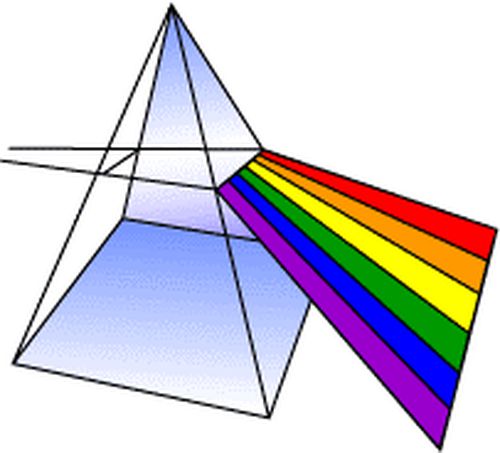
But there isn’t any triangular prism in the sky. So then how can you see a rainbow in the sky? Raindrops in the air act as prisms! In order to see a rainbow, the sun has to be behind you, and the clouds can’t be blocking the sunlight. The sunlight passes through the raindrops. Then the light is bent, the colors are separated, and a rainbow forms!
Comprehension Questions
1. You would be most likely to see a rainbow after a storm if - clouds cover the sky.
- the sun shines.
- the air becomes very dry.
- it gets very windy.
- clouds cover the sky.
- the sun shines.
- the air becomes very dry.
- it gets very windy.
2. What does the text describe? - how rainbows form
- Sir Isaac Newton’s famous discoveries
- how different types of discoveries are made
- experiments that include triangular prisms
- how rainbows form
- Sir Isaac Newton’s famous discoveries
- how different types of discoveries are made
- experiments that include triangular prisms
3. Read the following sentences:“Raindrops in the air act as prisms! In order to see a rainbow, the sun has to be behind you, and the clouds can’t be blocking the sunlight. The sunlight passes through the raindrops. Then the light is bent, the colors are separated, and a rainbow forms!”
In order for a rainbow to form, why can’t clouds be blocking the sunlight?
- The sunlight needs to reach the raindrops in order to bend them.
- The clouds need to bend the sunlight that passes through raindrops.
- The sunlight needs to act as a triangular prism.
- The sunlight needs to reach the raindrops in order to pass through them.
“Raindrops in the air act as prisms! In order to see a rainbow, the sun has to be behind you, and the clouds can’t be blocking the sunlight. The sunlight passes through the raindrops. Then the light is bent, the colors are separated, and a rainbow forms!”
In order for a rainbow to form, why can’t clouds be blocking the sunlight?
- The sunlight needs to reach the raindrops in order to bend them.
- The clouds need to bend the sunlight that passes through raindrops.
- The sunlight needs to act as a triangular prism.
- The sunlight needs to reach the raindrops in order to pass through them.
4. Which of these things helps to determine your ability to see a rainbow? - your height
- the number of mountains nearby
- your location
- the temperature outside
- your height
- the number of mountains nearby
- your location
- the temperature outside
5. This passage is mostly about - how rainbows are formed.
- Sir Isaac Newton’s career.
- the scientific uses of triangular prisms.
- what sunlight is made up of.
- how rainbows are formed.
- Sir Isaac Newton’s career.
- the scientific uses of triangular prisms.
- what sunlight is made up of.
6. Why does the author compare triangular prisms to drops of rain? Use evidence from the text to support your answer.
7. What happened when Sir Isaac Newton passed a beam of sunlight through a triangular prism?
8. Choose the word that best completes the sentence.Sunlight is made up of many colors, _________ red, orange, and yellow.
- especially
- above all
- particularly
- including
Sunlight is made up of many colors, _________ red, orange, and yellow.
- especially
- above all
- particularly
- including
Đăng ký:
Nhận xét (Atom)