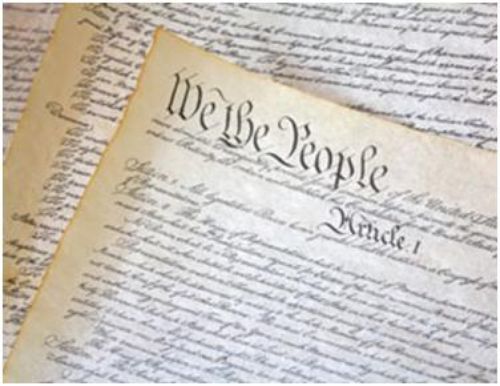
Excerpts from the United States Constitution, Article II
Section 1:
The executive Power shall be vested in a President of the United States of America. He shall hold his Office during the Term of four Years, and, together with the Vice President, chosen for the same Term, be elected, as follows:
[…]
No Person except a natural born Citizen, or a Citizen of the United States, at the time of the Adoption of this Constitution, shall be eligible to the Office of President; neither shall any Person be eligible to that Office who shall not have attained to the Age of thirty five Years, and been fourteen Years a Resident within the United States.
[…]
The President shall, at stated Times, receive for his Services, a Compensation, which shall neither be increased nor diminished during the Period for which he shall have been elected, and he shall not receive within that Period any other Emolument [salary or profit] from the United States, or any of them.
Before he enter on the Execution of his Office, he shall take the following Oath or Affirmation:--"I do solemnly swear (or affirm) that I will faithfully execute the Office of President of the United States, and will to the best of my Ability, preserve, protect and defend the Constitution of the United States."
Section 2:
The President shall be Commander in Chief of the Army and Navy of the United States, and of the Militia of the several States, when called into the actual Service of the United States …
He shall have Power, by and with the Advice and Consent of the Senate, to make Treaties, provided two thirds of the Senators present concur; and he shall nominate, and by and with the Advice and Consent of the Senate, shall appoint Ambassadors, other public Ministers and Consuls, Judges of the supreme Court, and all other Officers of the United States, whose Appointments are not herein otherwise provided for, and which shall be established by Law: but the Congress may by Law vest the Appointment of such inferior Officers, as they think proper, in the President alone, in the Courts of Law, or in the Heads of Departments.
[…]
Section 3:
He shall from time to time give to the Congress Information of the State of the Union, and recommend to their Consideration such Measures as he shall judge necessary and expedient; he may, on extraordinary Occasions, convene both Houses, or either of them, and in Case of Disagreement between them, with Respect to the Time of Adjournment, he may adjourn them to such Time as he shall think proper; he shall receive Ambassadors and other public Ministers; he shall take Care that the Laws be faithfully executed, and shall Commission all the Officers of the United States.
Section 4:
The President, Vice President and all civil Officers of the United States, shall be removed from Office on Impeachment for, and Conviction of, Treason, Bribery, or other high Crimes and Misdemeanors.
Excerpt from the 25th Amendment
Section 1:
In case of the removal of the President from office or of his death or resignation, the Vice President shall become President.
Comprehension Questions
1. How long is a presidential term? 
- five years
- eight years
- four years
- six years
- five years
- eight years
- four years
- six years
2. What does the second paragraph describe? - who is eligible to become President
- the responsibilities of the President
- what happens if the President dies in office
- how the President will be compensated
- who is eligible to become President
- the responsibilities of the President
- what happens if the President dies in office
- how the President will be compensated
3. The president needs the approval of the Senate to make treaties with other countries. What evidence from the passage supports this statement? - “He shall nominate, and by and with the Advice and Consent of the Senate, shall appoint Ambassadors, other public Ministers and Consuls…”
- “He shall have Power, by and with the Advice and Consent of the Senate, to make Treaties, provided two thirds of the Senators present concur.”
- “But the Congress may by Law vest the Appointment of such inferior Officers, as they think proper, in the President alone, in the Courts of Law, or in the Heads of Departments.”
- “He shall from time to time give to the Congress Information of the State of the Union, and recommend to their Consideration such Measures as he shall judge necessary and expedient.”
- “He shall nominate, and by and with the Advice and Consent of the Senate, shall appoint Ambassadors, other public Ministers and Consuls…”
- “He shall have Power, by and with the Advice and Consent of the Senate, to make Treaties, provided two thirds of the Senators present concur.”
- “But the Congress may by Law vest the Appointment of such inferior Officers, as they think proper, in the President alone, in the Courts of Law, or in the Heads of Departments.”
- “He shall from time to time give to the Congress Information of the State of the Union, and recommend to their Consideration such Measures as he shall judge necessary and expedient.”
4. The president is required to be at least 35 years old. Why might this be? - to ensure that no children run for president
- to ensure that he understand the needs of the people
- to ensure that the president is healthy enough
- to ensure the president has enough experience
- to ensure that no children run for president
- to ensure that he understand the needs of the people
- to ensure that the president is healthy enough
- to ensure the president has enough experience
5. What are these excerpts from Article II of the United States Constitution mostly about? - the role and responsibilities of the President
- the creation of the United States Constitution
- why the President must be at least 35 years old
- the oath the President must take when he is sworn in
- the role and responsibilities of the President
- the creation of the United States Constitution
- why the President must be at least 35 years old
- the oath the President must take when he is sworn in
6. Read the following sentence: “The President, Vice President and all civil Officers of the United States, shall be removed from Office on Impeachment for, and Conviction of, Treason, Bribery, or other high Crimes and Misdemeanors.”What does the word “impeachment” mean?
- the act of stealing money from the government
- the act of charging a public official with a crime
- the act of running for public office
- the act of creating new laws and regulations
What does the word “impeachment” mean?
- the act of stealing money from the government
- the act of charging a public official with a crime
- the act of running for public office
- the act of creating new laws and regulations
7. Choose the answer that best completes the sentence below.__________ the president may take office, he must swear an oath.
- Although
- Finally
- Before
- For example
__________ the president may take office, he must swear an oath.
- Although
- Finally
- Before
- For example


Không có nhận xét nào:
Đăng nhận xét