Blog này thảo luận và chia sẻ những tri thức về khoa học khí quyển và các khoa học khác.
"Mọi thứ chúng ta làm đều phải dựa vào nghiên cứu KHOA HỌC chất lượng cao nhất". Thien V. Le
Ngày xưa cách đây khoảng 6000 năm trước công nguyên có 2 người nông dân. Một người trồng rau như khoai, cà chua, rau xanh và một người khác thì nuôi vật nuôi để lấy sữa và trứng. Một tuần một lần thì 2 người nông dân gặp ở một nơi mua bán và trao đổi sản phẩm khác nhau. Sự trao đổi hàng hóa giữa 2 bên trước đây đã từng là hệ thống kinh tế chính của loài người.
Việc trao đổi hàng hóa không dùng tiền không phải là duy nhất nhưng đã được sử dụng cùng với các hệ thống kinh tế khác như trao đổi tiền kim loại, vàng và bạc. Thường thì vàng, bạc và tiền kim lọa chỉ có thể có ở những người giầu, trong khi những người nông dân và những người khác thì dùng hàng hóa trao đổi.
Khi mà việc trao đổi hàng hóa phát triên ,thì những người giầu trao đổi hàng hóa phức tạp hơn như những quần áo đắt tiền, vũ khí vv. Việc trao đổi hàng hóa không chỉ ở trong nội địa mà cả khắp thế giới. Những người giầu ra thế giới trao đổi lông thú, hàng thủ công để lấy nước hoa, lụa và da hươu lai.
Ưu điểm của việc sử dụng hàng hóa thay cho tiền là đơn giản và có sẵn. Bạn có thể chỉ trao đổi những gì bạn có bởi vậy bạn không lệ thuộc vào đồng tiền hay ai đó giúp bạn. Tuy nhiên việc sử dụng hàng hóa cũng có nhiều nhược điểm. Đầu tiên là làm thế nào chúng ta có thể xác định được giá trị của thứ gì đó? Ví dụ giả sử người nông dân trồng rau cần sữa và trứng từ người nông dân mà nuôi vật nuôi, nhưng người nông dân nuôi vật nuôi này lại không cần khoai? Điều đó sẽ tạo ra một vấn đề là người nông dân mà trồng rau sẽ phải tìm một người nông dân khác người mà sẵn sàng trao đổi sữa và trứng lấy rau và điều này không có sự đảm bảo chắc chắn. Thứ 2 là khi phát triển thì chúng ta trở lên là người tiêu dùng ngày càng phức tạp. Ngày nay chúng ta không chỉ cần thức ăn và quần áo; chúng ta có điện thoại, xe hơi, công nghệ và nhiều nữa. Càng nhiều thứ chúng ta có thì càng khó để xác định một giá trị so với các sản phẩm khác. Ví dụ chúng ta có 1 tử lạnh và chúng ta tìm mua giầy dép và 1 cái iPhone, chúng ta sẽ cần tìm ai đó mà đồng ý giá trị của 1 cái tử lạnh bàng giá trị của đôi giầy và 1 cái iPhone.
Việc phát minh ra đồng tiền là một dạng cân bằng của việc trao đổi tất cả các hàng hóa và dịch vụ và điều đó sẽ làm cho việc dễ dàng hơn để xác định một giá trị và đảm bảo chắc chắn là mỗi người có thể mua và bán bất kỳ thứ gì họ muốn mà không liên quan đến sự cần thiết của những người khác.
Tuy nhiên đồng tiền đang có những mặt trái.
Trong khi tiền là hệ thống kinh tế đối với thế giới hiện đại, nhưng tiền cũng không phải là hệ thống kinh tế hoàn hảo. Nếu chúng ta đã học được bài học từ dịch bệnh COVID-19 là tiền mặc dù giá trị của nó, nhưng nó không luôn luôn đủ bởi vì nó không là thức ăn hay nước uống. Chúng ta phải có thức ăn để sống.
Trong khi tiền vẫn là hệ thông chính trong tương lai gần, nhưng gần đây chúng ta cũng nhìn thấy sự xuất hiện của các loại thay thế khác cho tiền như Bitcoin và những tiền tệ số hóa không tập trung khác mà giá trị của chúng đang tăng nhanh trong suốt đại dịch. Nhưng ...
Trong suốt tuần qua miền Bắc liên tục có mưa rào và giông rải rác, riêng Hanoi thì hôm qua đã có mưa nhiều nơi hơn. Hình dưới cho biết phân bố lượng mưa ở Hanoi trong 3 ngày qua. Chiều tối qua Hanoi đã có mưa giông (sấm sét) nhiều nơi.
Hanoi đã có 1 tuần thời tiết nhiều nắng ban ngày nhưng đêm và sáng trời khá mát dễ chịu. Một số buổi sáng sớm thậm chí hơi se lạnh. Hãy xem sự biến đổi nhiệt độ của Hanoi trong 1 tuần qua (hình dưới)
Có những đêm nhiệt độ Hanoi xuống 26C nhưng ban ngày lên đến 36C. Chênh lệch ngày đêm khoảng 10C.
Trong tuần qua miền Bắc đã liên tục có mưa rào và giông. Vì sao? Do sự ảnh hưởng của cơn bão khi đi vào TQ và Ấn Độ làm cho sự giảm nhanh của nhiệt độ theo độ cao ở toàn miền Bắc trong tuần qua.
Vậy trong hôm nay và cuối tuần này thì sao? Trong hôm nay thì hình thế lại hoàn toàn khác khi mà hoàn lưu của hai cơn bão trên đã suy giảm nhiều làm cho sự giảm đột ngột của nhiệt độ theo độ cao ở miền Bắc sẽ không cao. Như vậy trong hôm nay thì miền Bắc sẽ ít mưa giông hơn.
Tuy nhiên sang 2 ngày cuối tuần thì lại khác? Sự giảm nhanh của nhiệt độ sẽ làm mưa giông xảy ra nhiều hơn vào chiều tối thứ 7 và ngày CN tuần này.
Khi nào thì miền Bắc không có khả năng mưa giông? Phân tích các kết quả của nhiêu mô hình cho thấy thì trong tuần sau từ thứ 2 đến thứ 6 (tức 2/8-6/8) là miền Bắc thời tiết ổn định nhất và hầu như không mưa.
Nói tóm lại: Trong hôm nay thì Hanoi KHÔNG thể có mưa và giông (sấm sét) như hôm qua, tuy nhiên trong chiều tối thứ 7 và ngày CN thì mưa và giông xảy ra nhiều nơi ở miền Bắc và Hanoi có thể bị ảnh hưởng.
Trong tuần sau thì thời tiết cả miền Bắc ổn định hơn trong tuần qua: Không còn mưa và giông nhiều thay vào đó nhiều NẮNG
Một số tỉnh thuộc khu vực Đông Bắc Bộ hôm nay có mưa rào rải rác (hình dưới).
Vậy Hà Nội có mưa rào và giông vào chiều nay không?
Hanoi vẫn chưa thể có mưa rào vào chiều tối nay vì xoáy áp thấp nhỏ hình thành ngay khu vực Đông Bắc Bộ (như Quảng Ninh) đã làm cho gió Tây tiếp tục phát triển và điều này do địa hình làm cho không khí khi đi xuống sẽ khô và nóng.
Tuy nhiên khi đến rạng sáng mai thì do sự giảm đột ngột của nhiệt độ làm cho Hanoi có mưa rào nhẹ một vài nơi.
As humans organize themselves into larger, more densely populated cities, the potential for infectious disease becomes ever more present.
Massive urban areas are like a ticking time bomb for infection – with humans, animals, food, garbage and sewage stacked tightly on top of eachother, it sets the stage for the perfect breeding ground for disease.
Our ancient ancestors lived in small isolated tribes that had very little opportunity to spread germs beyond their community. But after the advent of agriculture, tribes abandoned their nomadic lifestyles and organized into stationary civilizations. Since the dawn of civilization, mankind has dealt with epidemics, plagues and pandemics.
Unsanitary conditions
For most of history, city life consisted of over-crowded, unsanitary conditions. Food would often be prepared next to open sewers, while rats, cockroaches and the rotting corpses polluted the drinking water.
These early cities also featured humans and animals living in close proximity to one another – conditions that are strikingly similar to those in Wuhan, China, the source of the coronavirus outbreak.
Zoonotic diseases
These tight living quarters gave rise to the spread of zoonotic diseases, which are contagions transferred from animals to humans, such as COVID-19. Zoonotic diseases have been around since the earliest cities, but they would not become pandemics because these cities were isolated from one another. Once civilizations expanded into vast trading empires, the possibility for wide-spread disease was unleashed.
The first major pandemic was the Plague of Justinian, which struck the Byzintine empire in the year 541 AD. The bacterium responsible has been identified as Yersinia Pestis, commonly known as bubonic plague, a pathogen carried by rats and transferred to humans through fleas. After the plague had run its course, 25-50 million people had died, which was about a quarter of the earth’s population then.
Black Death
The plague returned with a vengeance eight hundred years later as the most infamous pandemic in human history.
In 1347, ships returned to the shores of Sicily filled with sailors stricken by a mysterious illness that formed dark swellings, or buboes, in the armpits and groin. This symptom led to the nickname ‘Black Death’.
The Venetians banned sailors from entering their cities for 40 days. In Italy this was called, ‘quaranta giorni’ which means ’40 days’ and explains where we get the word ‘quarantine’ in English.
While these quarantine efforts did help to deter the outbreak, in the end, the ‘black death’ took up to 200 million lives across Eurasia.
Endemic diseases
Europeans also had to endure many endemic diseases like Measles, Chickenpox, and especially smallpox, which killed millions over several centuries. Ironically these endemics would pave the way for Europeans to colonize the Americas.
Native Americans lacked any kind of immunity to these foreign pathogens, and once exposed, over 20 million or 90 percent of the pre-Colombian population would be wiped out. In the end, it would not be steal or guns that would conquer the new world, but infectious germs.
Spanish Flu
And perhaps we are still feeling the after effect of the horrendous Spanish Flu to this day. The most recent mass pandemic struck in 1918, and infected 500 million worldwide.
Unlike most diseases, Spanish Flu impacted young adults the hardest. Half of those that died were between ages 20 and 40 and 99 percent were under age 65. By the end of 1920, Spanish Flu claimed the lives of 50 to 100 million.
Good hygiene levels are essential when dealing with infectious diseases (Adobe: Do not use without permission)
Advances
Since these dark ages, we have made great advancements in sanitation, plumbing, medicine and personal hygiene. It is highly unlikely that COVID-19 will come anywhere close to Black Death or Spanish Flu, but this does not mean it should be taken lightly.
As a species we must evolve, learn and adapt if we want to survive. It’s still too early to fully comprehend the lesson of Coronavirus, but here are just a few takeaways we may want to consider:
1. Be prepared
We shouldn’t wait until the last second to get our act together. It’s better to be over prepared than underprepared.
2. Be hygiene conscious
These diseases tend to start in crowded, dirty markets that house live animals. Any place where animals are cramped into filthy unnatural conditions, there is the potential for a disease to fester and pass from animal to human. We need stricter regulation on the care and hygiene of these animals.
3. Be more self sufficient
The majority of humans today live in cities and the vast majority of city dwellers have no idea how to grow their own food. We live in an age where it’s so easy to buy what you need. Every single thing you can imagine is just one click away. But how would you get what you needed if amazon crashed?…or the grocery store shut down?…
Too dependent
Modern day humans have grown far too dependent on a system that is really quite fragile. One pandemic has the power to wipe out our financial system, our food system, our transportation, our electricity and every thing we depend on so dearly to live our comfortable lives.
We say this not to scare you, but to inspire you to think about how to be more self sufficient. More of us need to reconnect with the land and learn how to grow our own food. More of us need to build our own sustainable power sources.
We should teach our kids basic survival skills, like how to purify water or perform CPR. So consider taking a look at your lifestyle and access what you can do to cut back on your dependency and be more self sufficient. It can be something as small as planting a vegetable garden instead of a lawn. Or using a bidet instead of toilet paper.
In any case, Coronavirus has shown us that fear can be just as debilitating and contagious as the disease itself. Our Society is based on trust. Without trust, society begins to break down. Fear is the ultimate destroyer of trust. We must not make decisions from a place of fear.
These global pandemics are devastating, but they can also be seen as an opportunity for our species to learn and evolve. Diseases are nature’s way of teaching us valuable lessons. If we want to survive, it is critical that we listen to these lessons, study the history, and continue to expand our consciousness.
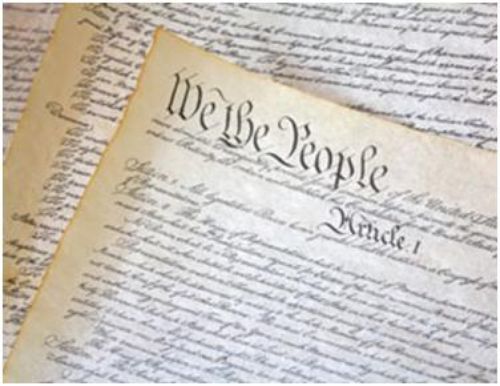
Excerpts from the United States Constitution, Article II
Section 1:
The executive Power shall be vested in a President of the United States of America. He shall hold his Office during the Term of four Years, and, together with the Vice President, chosen for the same Term, be elected, as follows:
[…]
No Person except a natural born Citizen, or a Citizen of the United States, at the time of the Adoption of this Constitution, shall be eligible to the Office of President; neither shall any Person be eligible to that Office who shall not have attained to the Age of thirty five Years, and been fourteen Years a Resident within the United States.
[…]
The President shall, at stated Times, receive for his Services, a Compensation, which shall neither be increased nor diminished during the Period for which he shall have been elected, and he shall not receive within that Period any other Emolument [salary or profit] from the United States, or any of them.
Before he enter on the Execution of his Office, he shall take the following Oath or Affirmation:--"I do solemnly swear (or affirm) that I will faithfully execute the Office of President of the United States, and will to the best of my Ability, preserve, protect and defend the Constitution of the United States."
Section 2:
The President shall be Commander in Chief of the Army and Navy of the United States, and of the Militia of the several States, when called into the actual Service of the United States …
He shall have Power, by and with the Advice and Consent of the Senate, to make Treaties, provided two thirds of the Senators present concur; and he shall nominate, and by and with the Advice and Consent of the Senate, shall appoint Ambassadors, other public Ministers and Consuls, Judges of the supreme Court, and all other Officers of the United States, whose Appointments are not herein otherwise provided for, and which shall be established by Law: but the Congress may by Law vest the Appointment of such inferior Officers, as they think proper, in the President alone, in the Courts of Law, or in the Heads of Departments.
[…]
Section 3:
He shall from time to time give to the Congress Information of the State of the Union, and recommend to their Consideration such Measures as he shall judge necessary and expedient; he may, on extraordinary Occasions, convene both Houses, or either of them, and in Case of Disagreement between them, with Respect to the Time of Adjournment, he may adjourn them to such Time as he shall think proper; he shall receive Ambassadors and other public Ministers; he shall take Care that the Laws be faithfully executed, and shall Commission all the Officers of the United States.
Section 4:
The President, Vice President and all civil Officers of the United States, shall be removed from Office on Impeachment for, and Conviction of, Treason, Bribery, or other high Crimes and Misdemeanors.
Excerpt from the 25th Amendment
Section 1:
In case of the removal of the President from office or of his death or resignation, the Vice President shall become President.
Comprehension Questions
1.How long is a presidential term?
five years
eight years
four years
six years
2.What does the second paragraph describe?
who is eligible to become President
the responsibilities of the President
what happens if the President dies in office
how the President will be compensated
3.The president needs the approval of the Senate to make treaties with other countries. What evidence from the passage supports this statement?
“He shall nominate, and by and with the Advice and Consent of the Senate, shall appoint Ambassadors, other public Ministers and Consuls…”
“He shall have Power, by and with the Advice and Consent of the Senate, to make Treaties, provided two thirds of the Senators present concur.”
“But the Congress may by Law vest the Appointment of such inferior Officers, as they think proper, in the President alone, in the Courts of Law, or in the Heads of Departments.”
“He shall from time to time give to the Congress Information of the State of the Union, and recommend to their Consideration such Measures as he shall judge necessary and expedient.”
4.The president is required to be at least 35 years old. Why might this be?
to ensure that no children run for president
to ensure that he understand the needs of the people
to ensure that the president is healthy enough
to ensure the president has enough experience
5.What are these excerpts from Article II of the United States Constitution mostly about?
the role and responsibilities of the President
the creation of the United States Constitution
why the President must be at least 35 years old
the oath the President must take when he is sworn in
6.Read the following sentence: “The President, Vice President and all civil Officers of the United States, shall be removed from Office on Impeachment for, and Conviction of, Treason, Bribery, or other high Crimes and Misdemeanors.”
What does the word “impeachment” mean?
the act of stealing money from the government
the act of charging a public official with a crime
the act of running for public office
the act of creating new laws and regulations
7.Choose the answer that best completes the sentence below.
__________ the president may take office, he must swear an oath.
Although
Finally
Before
For example
8.What happens if the president dies, resigns, or is removed from office?
(written answer)
9.Name two things for which the president needs the consent of the Senate.
(written answer)
10.Why did the writers of the Constitution likely put rules in place that require the president to have approval of the Senate?
China has more people than any other country in the world. China is almost equivalent, land-wise, to the United States. However, China has a much larger population.
The bars on the graph above compare the populations of China and the United States. Over 1,300,000,000 people live in China. This is four times more than the number of people who live in the United States!
Many Chinese live in cities. As people move to the cities, the cities grow. People build houses and businesses on land that was once used for farming. Then the land can no longer be used to grow crops. This makes it hard for China to grow enough food for its people.
The government was not sure there was enough food to feed people in the growing cities. So lawmakers tried to keep the cities from growing. The government even made a law to control population growth. The law said that most families living in cities should only have one child. Parents who have more than one child would have to pay a fine.
Comprehension Questions
1.According to the passage, China’s population is
about equal to the U.S. population
about four times larger than the U.S. population
about half of the U.S. population
only a tiny bit more than the U.S. population
2.Why does the author include information about the U.S. population?
to compare whether China or the U.S. is a better country
to show that China is smaller than most other countries
to help the reader understand how many people live in China
to prove that China needs to increase its population
3.Based on information in this passage, it can be concluded that
it would be better if people only lived in city areas.
China’s population wants to move to other countries.
there is more than enough land in China to grow food for everyone.
the Chinese government is worried about the population.
4.Read the following sentences: “People build houses and businesses on land that was once used for farming. Then the land can no longer be used to grow crops.”
The word crops means
food that is farmed
types of businesses
children
apartment buildings
5.This passage is mostly about
the differences between China and the United States.
the size of China’s population and where people live.
laws in China about the population.
why it’s hard to have children in cities.
6.What law did China’s government make to try to control the population?
(written answer)
7.Explain how making more food might solve a population problem instead of having to decrease the population.
(written answer)
8.The question below is an incomplete sentence. Choose answer that best completes the sentence.
China has a lot more people than the United States, _________ both countries have about the same amount of land.