Life Science
Grade: 3
This text is adapted from an original work of the Core Knowledge Foundation.
Scientists study the characteristics of animals. They do this to divide the animal kingdom into different groups, such as mammals and reptiles. One group of animals within the animal kingdom is fish.
Fish are aquatic animals, meaning that they spend their lives underwater. Most fish are coldblooded. Their body temperature changes with the temperature of the water. Fish are also vertebrates, meaning they have backbones. In fact, they are the largest group of animals on Earth that are vertebrates. Earth is covered mostly by water, so it makes sense that fish are the most common vertebrates. There are many different types and sizes of fish.
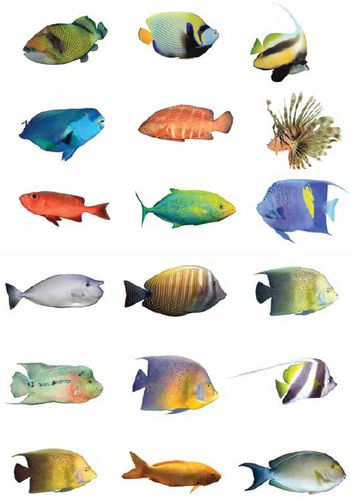
Fish come in many sizes and colors.
Fish lay eggs underwater. They also eat and sleep under water. Fish do not sleep in the same way mammals sleep. Fish can’t close their eyes because they don’t have eyelids. When they sleep, they float around or find a place to hide while they rest.
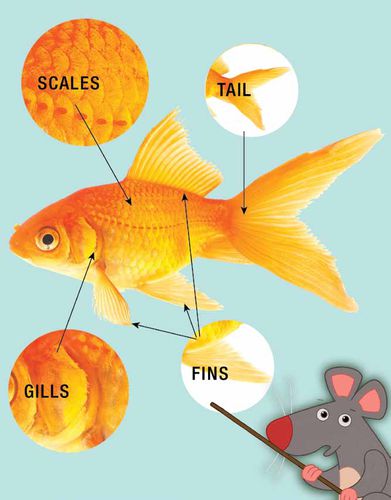
Like other animals, fish need to breathe oxygen. But fish do not have lungs like people and they do not breathe oxygen from the air. Instead, they have gills just behind their heads. Fish gills take oxygen out of the water, so that fish can breathe. But gills do not work well outside water. They cannot take oxygen out of the air. A fish will die quickly—within several minutes—if it is removed from water.
Fish have scales that cover their skin. Scales are rounded and smooth, and there is usually an inner and outer layer. The scales protect the skin and help fish move easily through the water. Fish also use the different fins on their body and their tails to swim. They are able to glide through the water, rapidly changing direction by using their fins and tail.
Most fish live in saltwater, because most water on Earth is salty. Tropical fish that live in the warm ocean are very colorful. They look as if an artist painted interesting patterns on their bodies. Many fish also live in freshwater, including streams, rivers, lakes, and ponds.
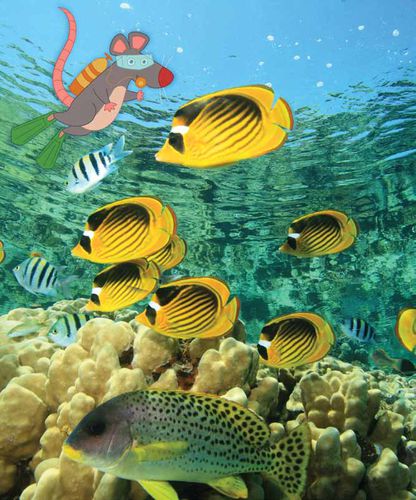
These tropical fish live in a saltwater habitat.
Some fish travel in groups called schools. One type of fish that travels in schools is salmon. Salmon live in both saltwater and freshwater. Some types of salmon are born in freshwater streams and rivers. After about a year, they make their way to the ocean where they live for one to five years. Then, they migrate back to the exact same stream where they were born. They lay eggs and the life cycle begins again.
Salmon don’t use a map to help them find their way back home. Most scientists think they use their strong sense of smell to find their way. They swim upstream, against the river’s current, sometimes swimming hundreds of miles. They leap over waterfalls and rocks to get to the same stream where they were born. They go through all this hard work to reach their home to lay their eggs.
Hopefully, along the way, a grizzly bear or fisherman won’t catch them first. It just so happens that salmon are among the tastiest of all fish!
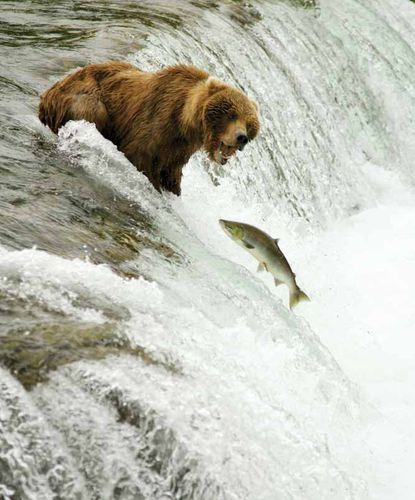
A salmon leaping over a waterfall to get upstream to lay its eggs must watch out for enemies.
Comprehension Questions
1. Where do fish spend their lives? 
(written answer)
2. This text describes many characteristics of fish. What are TWO characteristics of fish described in the text?
(written answer)
3. What is the main idea of this text?
(written answer)


Không có nhận xét nào:
Đăng nhận xét