Blog này thảo luận và chia sẻ những tri thức về khoa học khí quyển và các khoa học khác.
"Mọi thứ chúng ta làm đều phải dựa vào nghiên cứu KHOA HỌC chất lượng cao nhất". Thien V. Le
Những ngày này Hanoi và miền Bắc đang và sẽ chứng kiến cảnh sương mù dày đặc vào sáng sớm và trời âm u cả ngày không có ánh sáng mặt trời. Thời tiết này dễ làm nhiều người cảm thấy buốn chán và muốn đi ra khỏi miền Bắc. Nhưng đừng quên sương mù đậm đặc cũng là một dấu hiệu tốt được báo trước... một ngày NẮNG quang mây đang ở rất gần.
Ảnh vệ tinh cho biết sương mù đậm đặc sáng nay
Làm thế nào mà lại nói đúng được như vậy? Sương mù đã được phân tích và dự báo nhiều trong blog này nhiều năm. Nhớ lại theo KHOA HỌC thì sương mù dày đặc xuất hiện thì cần 3 nhân tố đó là gió, độ ẩm và bề mặt đất phải lạnh rất lạnh. Sự lạnh đi đó sẽ làm cho không khí gần mặt đất sẽ bão hòa và xuất hiện nhiều các hạt nước (đôi khi còn có thể làm mưa rất nhỏ như sáng nay). Hình dưới cho biết sương mù đã làm giảm tầm nhìn cho Hanoi trong sáng nay xuống thấp nhất.
Có 2 điều làm bề mặt lạnh nhanh đi đó là do không khí lạnh phía Bắc tràn xuống và sự phát xạ mạnh của bức xạ sóng dài hồng ngoại ở bề mặt vào không gian bên trên. Để có được điều sau thì yêu cầu phải quang mây và không khí bên trên cao tương đối khô. Vì sao? Vì mây làm giảm mất bức xạ hồng ngoại do nó ngăn cản một số bức xạ từ mặt đất và đồng thời tự bản thân mây phát xạ trở lại mặt đất. Không khí khô bên trên cao kết hợp với ít mây là do hình thế khí áp cao trên cao và có không khí nặng hơn đi xuống. Khí áp cao ở bề mặt thì là nhân tố tốt cho sương mù hình thành vì liên quan gió nhẹ, nhưng nếu có khí áp cao trên cao thì sẽ làm gió mạnh hơn và sương mù sẽ tan do sự xáo trộn của không khí khô xuống (điều này chúng ta sẽ chứng kiến trong 1 vài ngày tới )
Tóm lại là trên cao trời quang có áp cao và độ ẩm thấp làm cho bề mặt đất mất nhiệt nhiều và lạnh đi nhanh chóng (chúng ta đang cảm thấy rất lạnh lúc này). Sự lạnh đi bề mặt nó làm cho không khí cạnh nó cũng lạnh đi dẫn đến nhiệt độ giảm xuống và khi đạt tới giá trị điểm sương thì sương mù hình thành (như chúng ta đang chứng kiến hôm quan hôm nay và ngày mai).
Khi nào Hanoi có NẮNG?
Lớp sương mù này có dày hay mỏng phụ thuộc vào sự lạnh đi của bề mặt nhiều hay ít và cuối cùng thi bức xạ mặt trời sẽ xóa tan hết. Chuẩn bị cho một ngày NẮNG vào ngày đầu tiên thứ 2 của năm mới tức Chủ Nhật tuần này (2/1/2022).).
Chúc tất cả mọi người năm mới 2022 mọi điều tốt đẹp!
Effects of vitamin D on immune responses induced by COVID-19 vaccines.
Abstract
Severe acute respiratory syndrome coronavirus 2 is a new, highly pathogenic virus that has recently elicited a global pandemic called the 2019 coronavirus disease (COVID-19). COVID-19 is characterized by significant immune dysfunction, which is caused by strong but unregulated innate immunity with depressed adaptive immunity. Reduced and delayed responses to interferons (IFN-I/IFN-III) can increase the synthesis of proinflammatory cytokines and extensive immune cell infiltration into the airways, leading to pulmonary disease. The development of effective treatments for severe COVID-19 patients relies on our knowledge of the pathophysiological components of this imbalanced innate immune response. Strategies to address innate response factors will be essential. Significant efforts are currently underway to develop vaccines against SARS-CoV-2. COVID-19 vaccines, such as inactivated DNA, mRNA, and protein subunit vaccines, have already been applied in clinical use. Various vaccines display different levels of effectiveness, and it is important to continue to optimize and update their composition in order to increase their effectiveness. However, due to the continuous emergence of variant viruses, improving the immunity of the general public may also increase the effectiveness of the vaccines. Many observational studies have demonstrated that serum levels of vitamin D are inversely correlated with the incidence or severity of COVID-19. Extensive evidence has shown that vitamin D supplementation could be vital in mitigating the progression of COVID-19 to reduce its severity. Vitamin D defends against SARS-CoV-2 through a complex mechanism through interactions between the modulation of innate and adaptive immune reactions, ACE2 expression, and inhibition of the renin-angiotensin system (RAS). However, it remains unclear whether Vit-D also plays an important role in the effectiveness of different COVID-19 vaccines. Based on analysis of the molecular mechanism involved, we speculated that vit-D, via various immune signaling pathways, plays a complementary role in the development of vaccine efficacy.
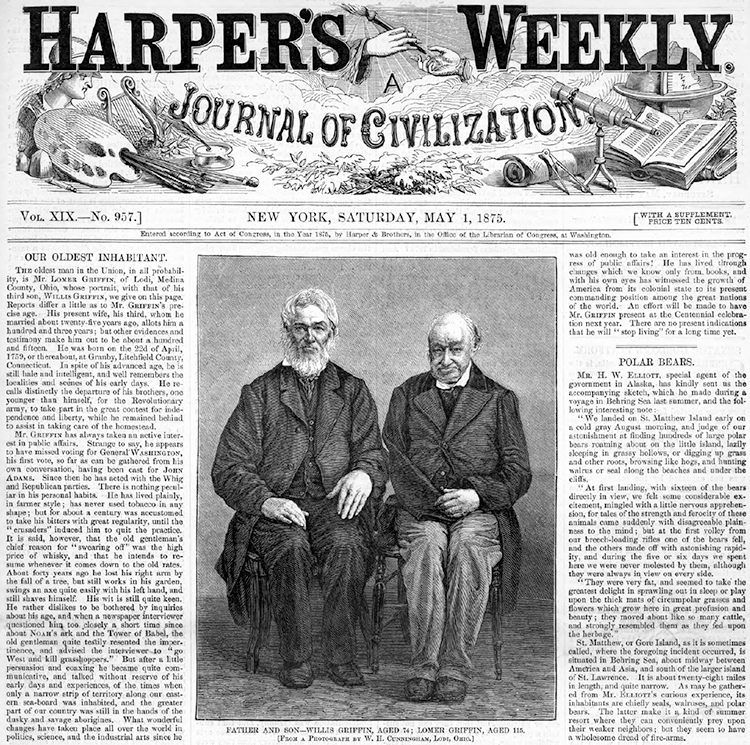
n 1875, Harper’s Weekly declared one Lomer Griffin of Lodi, Ohio, to be, “in all probability,” the oldest man in the union. His age, allegedly, was 116.
There were doubters. Lomer’s own wife, for instance, said he was only 103. And William John Thoms, an English author and demographer who had just written a book on human longevity, expressed skepticism of all such centenarian claims. A human’s maximum life span was about 100, Thoms asserted. Certainly no claim of an age over 110 had ever been verified.
“Evidence of any human being having attained the age, not of 130 or 140, but of 110 years … will be found upon examination utterly worthless,” he wrote.
Centuries of expert testimony (not to mention insurance company data) had established 100 years as the longest possible human lifetime, Thoms insisted — apart from a few “extremely rare” exceptions. He expressed bewilderment that some medical authorities still believed that a lifetime might exceed nature’s rigorously imposed limit.
In 1875, Harper’s Weekly identified Lomer Griffin as “the oldest man in the Union, in all probability.” Though his actual age was debatable, he was held up as an example of an extremely long life.
CREDIT: HARPER’S WEEKLY / ARCHIVE.ORG
Yet even today, almost a century and a half after Lomer Griffin’s death in 1878 (at age 119 by some accounts), scientists still dispute what the oldest human age could ever be — and whether there is any limit at all. After all, more than a dozen people are alive today with validated ages over 110 (and many more that old are still around, just not documented). Yet in only one verified case has anyone lived beyond 120 — the French woman Jeanne Calment, who died in 1997 at age 122.
“The possible existence of a hard upper limit, a cap, on human lifetimes is hotly debated,” write Léo Belzile and coauthors in a paper to appear in Annual Review of Statistics and Its Application. “There is sustained and widespread interest in understanding the limit, if there is any, to the human life span.”
It’s a question with importance beyond just whether people lie about their age to get recognized by Guinness World Records. For one thing, absence of an upper age limit could affect the viability of social security and pension systems. And determining whether human lifetimes have an inviolate maximum might offer clues to understanding aging, as well as aiding research on prolonging life.
But recent studies have not yet resolved the issue, instead producing controversy arising from competing claims, note Belzile, a statistician at the business university HEC Montréal in Canada, and colleagues. Some of that controversy, they suggest, stems from incorrect methods of statistical analysis. Their own reanalysis of data on extreme lifetimes indicates that any longevity cap would be at least 130 years and possibly exceed 180. And some datasets, the authors report, “put no limit on the human life span.”
These analyses “suggest that the human life span lies well beyond any individual lifetime yet observed or that could be observed in the absence of major medical advances.”
Such conclusions contradict the old claims of Thoms and others that nature imposed a strict limit to lifetime. Thoms supported that view by quoting the 18th century French naturalist Georges-Louis Leclerc, Comte de Buffon. Lifetime extremes did not seem to vary much from culture to culture despite differences in lifestyles or diets, Buffon pointed out. “It will at once be seen that the duration of life depends neither upon habits, nor customs, nor the quality of food, that nothing can change the fixed laws which regulate the number of our years,” he wrote.
Thoms’ own investigation into reports of superlong lifetimes found that in every instance mistakes had been made — a father confused with a son, for instance, or a birth record identified with the wrong child. And of course, some people simply lied.
Even today, the lack of high-quality data confounds statistical attempts to estimate a maximum life span. “Age overstatement is all too frequent, as a very long life is highly respected, so data on supercentenarians must be carefully and individually validated to ascertain that the reported age at death is correct,” write Belzile and coauthors.
Fortunately, some collections provide verified data on the oldest of the old. One such collection, the International Data Base on Longevity, includes information from 13 countries on supercentenarians (those living to age 110 or beyond) and for 10 countries on semisupercentenarians (those reaching 105 but not making it to 110).
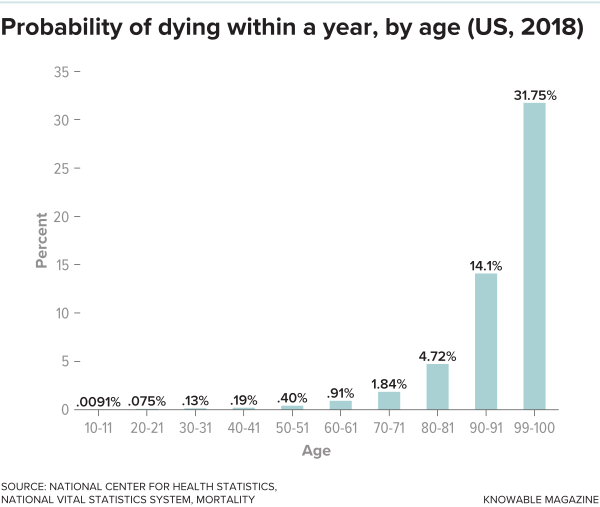
Analyzing such datasets requires skillful use of multiple statistical tools to infer maximum longevity. A key concept in that regard is called the “force of mortality,” or “hazard function,” a measure of how likely someone reaching a given age is to live a year longer. (A 70-year-old American male, for instance, has about a 2 percent chance of dying before reaching 71.)
Of course, the hazard of dying changes over time — youngsters are generally much more likely to live another year than a centenarian is, for instance. By establishing how death rates change with age, statistical methods can then be applied to estimate the maximum possible life span.
The “hazard function” is a measure of how likely someone reaching a given age will live another year, shown here by looking at the probability of dying within the year. A 10-year-old faces a very small chance of dying before reaching 11, for example, compared with an 80-year-old’s chance of dying before 81. But the probability of dying among the very oldest people appears to level off. By establishing how death rates change with age, statistical methods can then be applied to estimate the maximum possible life span.
From age 50 or so onward, statistics show, the risk of death increases year by year. In fact, the death rate rises exponentially over much of the adult life span. But after age 80 or so, the rate of mortality increase begins to slow down (an effect referred to as late-life mortality deceleration). Equations that quantify changes in the hazard function show that it levels off at some age between 105 and 110. That means equations derived from lower age groups are unreliable for estimating life span limits; proper analysis requires statistics derived from those aged 105 and up.
Analyses of those groups suggest that by age 110 or so, the rate of dying in each succeeding year is roughly 50 percent (about the same for men as for women). And the data so far do not rule out an even smaller annual chance of death after that.
Depending on the details of the dataset (such as what age ranges are included, and for what country), a possible longevity cap is estimated in the range of 130–180. But in some cases the statistics imply a cap of at least 130, with no upper limit. Mathematically, that means the highest ages in a big enough population would be infinite — implying immortality.
But in reality, there’s no chance that anybody will beat Methuselah’s Biblical old age record of 969. The lack of a mathematical upper bound does not actually allow a potentially infinite life span.
“Every observed lifetime has been and always will be finite,” Belzile and coauthors write, “so careful translation of mathematical truths into everyday language is required.”
Stay in the Know Sign up for the Knowable newsletter today
For one thing, a 50 percent chance of living to the next year makes the odds pretty slim that a 110-year-old will live to 130 — about one chance in a million. (That’s the equivalent of tossing coins and getting 20 heads in a row). Nevertheless, if the math is correct in indicating no true longevity cap, the old-age record could continue to climb to ages now unimaginable. Other researchers have pointed out that, with an increasing number of supercentenarians around, it’s conceivable that someone will reach 130 in this century. “But a record much above this will remain highly unlikely,” Belzile and colleagues note.
As for Lomer Griffin, claims of reaching age 119 were clearly exaggerated. By his (third) wife’s reckoning he was 106 when he died, and his tombstone agrees, giving his dates as 1772–1878. Alas, his birth record (recorded in Simsbury, Connecticut) shows that Lomer (short for his birth name, Chedorlaomer) didn’t really reach 106 at all. He was born April 22, 1774, making him a mere 104 at death. But he still may very well have been the nation’s oldest citizen, because anyone claiming to be older was probably lying about their age as well.
Editor’s note: Lomer Griffin is the writer’s great-great-great-great grandfather.
Nghiên cứu mới cho thấy trẻ em ăn nhiều trái cây và rau có sức khỏe tinh thần tốt hơn. Nghiên cứu này là nghiên cứu đầu tiên điều tra mối liên hệ giữa việc ăn trái cây và rau quả, lựa chọn bữa sáng và bữa trưa, và sức khỏe tinh thần ở trẻ em đi học ở Vương quốc Anh. Nhóm nghiên cứu đã nghiên cứu dữ liệu từ gần 9.000 trẻ em ở 50 trường học. Họ phát hiện ra rằng các loại bữa sáng và bữa trưa được ăn bởi cả học sinh tiểu học và trung học cơ sở có liên quan đáng kể đến sức khỏe.
Results In secondary school analyses, a strong association between nutritional variables and well-being scores was apparent. Higher combined fruit and vegetable consumption was significantly associated with higher well-being: well-being scores were 3.73 (95% CI 2.94 to 4.53) units higher in those consuming five or more fruits and vegetables (p<0.001; n=1905) compared with none (n=739). The type of breakfast or lunch consumed was also associated with significant differences in well-being score. Compared with children consuming a conventional type of breakfast (n=5288), those not eating any breakfast had mean well-being scores 2.73 (95% CI 2.11 to 3.35) units lower (p<0.001; n=1129) and those consuming only an energy drink had well-being scores 3.14 (95% CI 1.20 to 5.09) units lower (p=0.002; n=91). Likewise, children not eating any lunch had well-being scores 2.95 (95% CI 2.22 to 3.68) units lower (p<0.001; 860) than those consuming a packed lunch (n=3744). In primary school analyses, the type of breakfast or lunch was associated with significant differences in well-being scores in a similar way to those seen in secondary school data, although no significant association with fruit and vegetable intake was evident.
Tỷ lệ tiêm chủng COVID-19 cao được kỳ vọng sẽ làm giảm sự lây truyền SARS-CoV-2 trong quần thể bằng cách giảm số lượng các nguồn có thể lây truyền và do đó giảm gánh nặng của bệnh COVID-19. Tuy nhiên, dữ liệu gần đây chỉ ra rằng mức độ liên quan về mặt dịch tễ học của những người được tiêm chủng COVID-19 đang tăng lên.
High COVID-19 vaccination rates were expected to reduce transmission of SARS-CoV-2 in populations by reducing the number of possible sources for transmission and thereby to reduce the burden of COVID-19 disease. Recent data, however, indicate that the epidemiological relevance of COVID-19 vaccinated individuals is increasing. In the UK it was described that secondary attack rates among household contacts exposed to fully vaccinated index cases was similar to household contacts exposed to unvaccinated index cases (25% for vaccinated vs 23% for unvaccinated). 12 of 31 infections in fully vaccinated household contacts (39%) arose from fully vaccinated epidemiologically linked index cases. Peak viral load did not differ by vaccination status or variant type [[1]]. In Germany, the rate of symptomatic COVID-19 cases among the fully vaccinated (“breakthrough infections”) is reported weekly since 21. July 2021 and was 16.9% at that time among patients of 60 years and older [[2]]. This proportion is increasing week by week and was 58.9% on 27. October 2021 (Figure 1) providing clear evidence of the increasing relevance of the fully vaccinated as a possible source of transmission. A similar situation was described for the UK. Between week 39 and 42, a total of 100.160 COVID-19 cases were reported among citizens of 60 years or older. 89.821 occurred among the fully vaccinated (89.7%), 3.395 among the unvaccinated (3.4%) [[3]]. One week before, the COVID-19 case rate per 100.000 was higher among the subgroup of the vaccinated compared to the subgroup of the unvaccinated in all age groups of 30 years or more. In Israel a nosocomial outbreak was reported involving 16 healthcare workers, 23 exposed patients and two family members. The source was a fully vaccinated COVID-19 patient. The vaccination rate was 96.2% among all exposed individuals (151 healthcare workers and 97 patients). Fourteen fully vaccinated patients became severely ill or died, the two unvaccinated patients developed mild disease [[4]]. The US Centres for Disease Control and Prevention (CDC) identifies four of the top five counties with the highest percentage of fully vaccinated population (99.9–84.3%) as “high” transmission counties [[5]]. Many decisionmakers assume that the vaccinated can be excluded as a source of transmission. It appears to be grossly negligent to ignore the vaccinated population as a possible and relevant source of transmission when deciding about public health control measures.[1]]. In Germany, the rate of symptomatic COVID-19 cases among the fully vaccinated (“breakthrough infections”) is reported weekly since 21. July 2021 and was 16.9% at that time among patients of 60 years and older [[2]]. This proportion is increasing week by week and was 58.9% on 27. October 2021 (Figure 1) providing clear evidence of the increasing relevance of the fully vaccinated as a possible source of transmission. A similar situation was described for the UK. Between week 39 and 42, a total of 100.160 COVID-19 cases were reported among citizens of 60 years or older. 89.821 occurred among the fully vaccinated (89.7%), 3.395 among the unvaccinated (3.4%) [[3]]. One week before, the COVID-19 case rate per 100.000 was higher among the subgroup of the vaccinated compared to the subgroup of the unvaccinated in all age groups of 30 years or more. In Israel a nosocomial outbreak was reported involving 16 healthcare workers, 23 exposed patients and two family members. The source was a fully vaccinated COVID-19 patient. The vaccination rate was 96.2% among all exposed individuals (151 healthcare workers and 97 patients). Fourteen fully vaccinated patients became severely ill or died, the two unvaccinated patients developed mild disease [
]. Many decisionmakers assume that the vaccinated can be excluded as a source of transmission. It appears to be grossly negligent to ignore the vaccinated population as a possible and relevant source of transmission when deciding about public health control measures.
Study shows how vitamin D could halt lung inflammation in COVID-19
Share on PinterestScientists have discovered that a form of vitamin D could help reduce lung inflammation in COVID-19. Zoonar RF/Getty Images
A special form of Vitamin D — not found over the counter (OTC) — may be able to combat lung inflammation caused by immune cells, a new study suggests.
The research shows vitamin D has a “switch-off” mechanism for inflammation, which could work in severe COVID-19.
However, clinical trials are needed before vitamin D is adopted to treat COVID-19 or other respiratory diseases.
The researchers warn against people taking more than the recommended amount of vitamin D in hopes of staving off COVID-19 infection.
Scientists are sharing insight into how vitamin D could help in severe COVID-19 cases by revealing how the vitamin functions to reduce hyper-inflammation caused by immune cells.
A new joint study by Purdue University and the National Institutes of Health (NIH) demonstrates how an active metabolite of vitamin D — not a form sold OTC — is involved in “switching off” inflammation in the body during infections such as COVID-19.
“Since inflammation in severe cases of COVID-19 is a key reason for morbidity and mortality, we decided to take a closer look at lung cells from COVID-19 patients,” said lead authors Dr. Behdad (Ben) Afzali, chief of the Immunoregulation Section of the NIH’s National Institute of Diabetes and Digestive and Kidney Diseases, and Dr. Majid Kazemian, assistant professor of biochemistry and computer science at Purdue University.